

From Hampshire To The Highlands: Our Great Scotland Tour 2026
Our Great Scotland Tour begins in Hampshire, in the soft, orderly countryside west of London. Guests fly into Heathrow, where executive transfers are waiting to carry them out to our English country house hotel. After a long journey, there’s no rush to do anything except unpack, rest and take in the setting. The lawns and quiet lanes feel a long way from the airport, and farther still from the remote Highland roads we’ll be driving in a few days’ time.
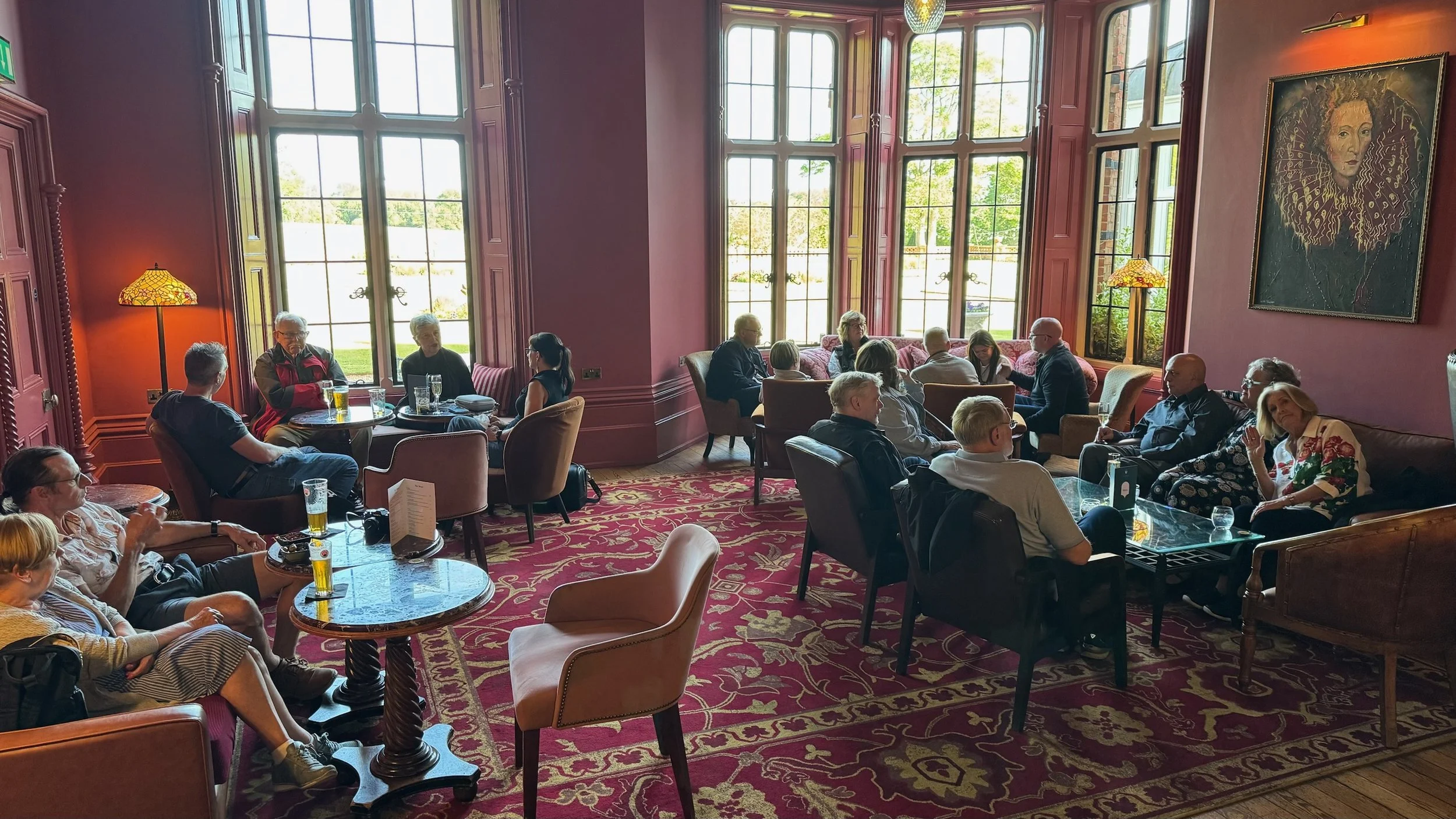
That evening, we start with drinks in the Library Bar before sitting down to dinner. It’s a magnificent room, with books lining the shelves, comfortable chairs and all the character of a grand historic house. At first, everyone is talking about their flights and where they’ve travelled from. Then the conversation turns to the Minis, the route and what lies ahead. You can see people beginning to relax, and the excitement of the tour starting to take over.
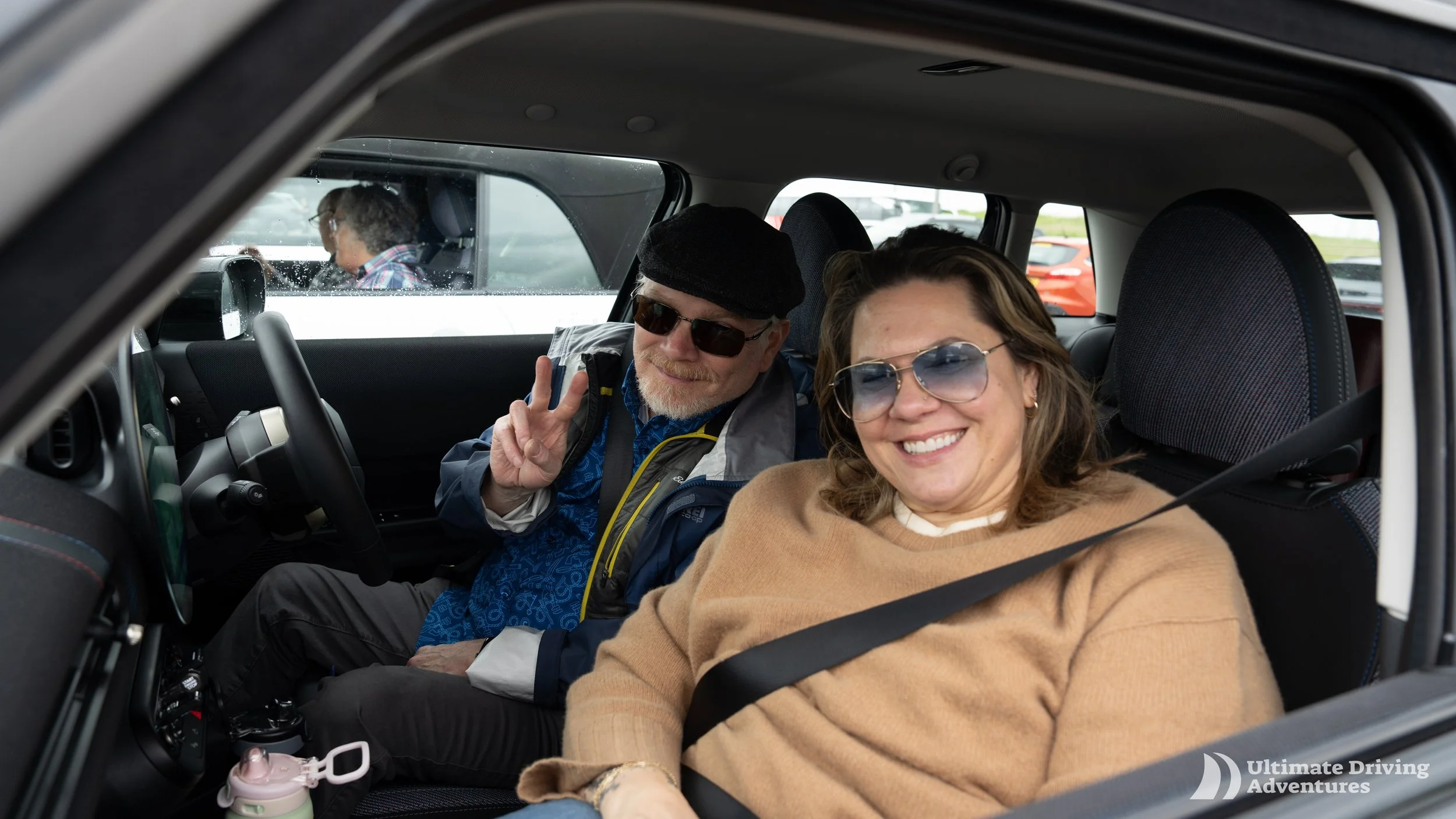
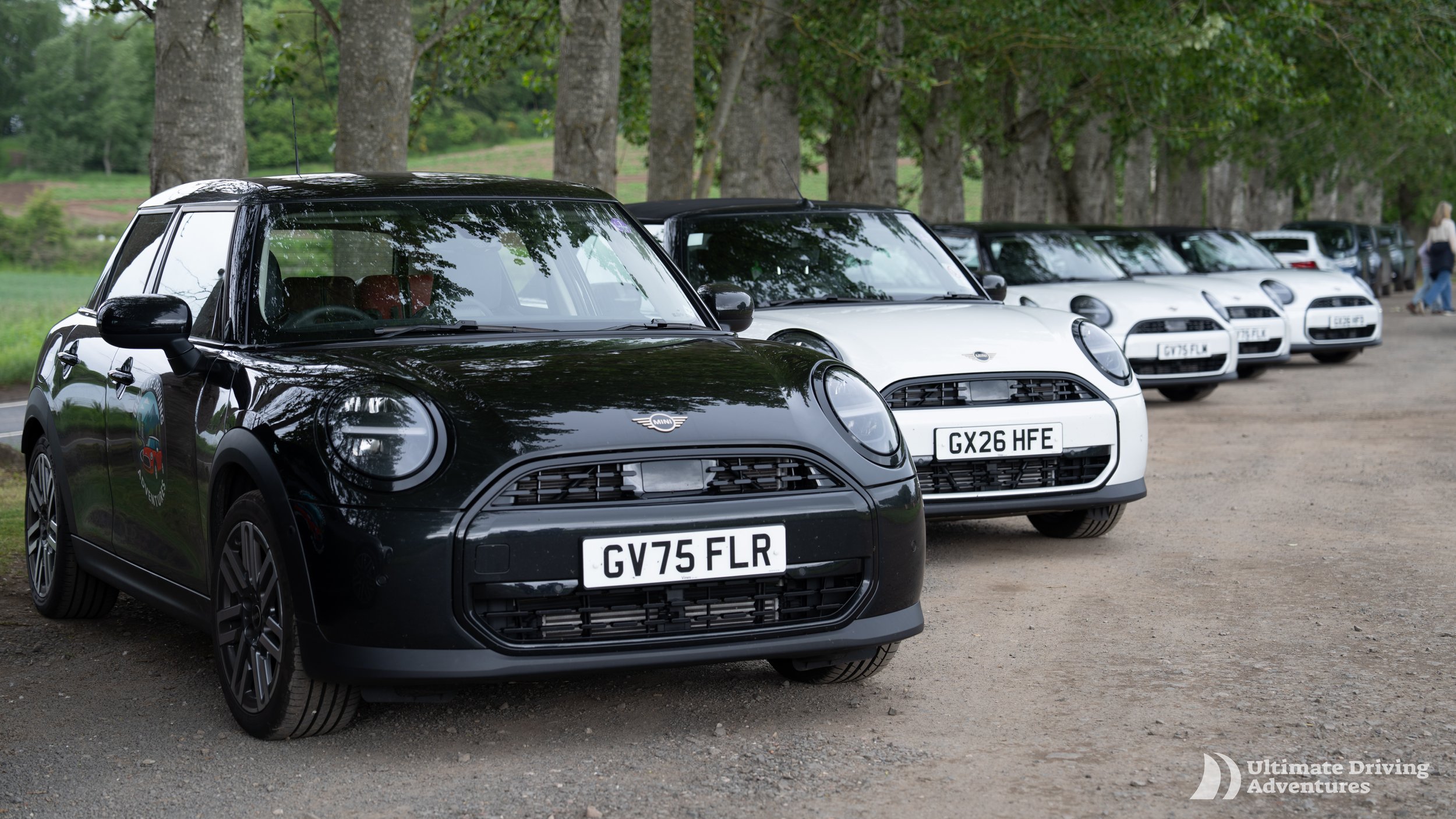
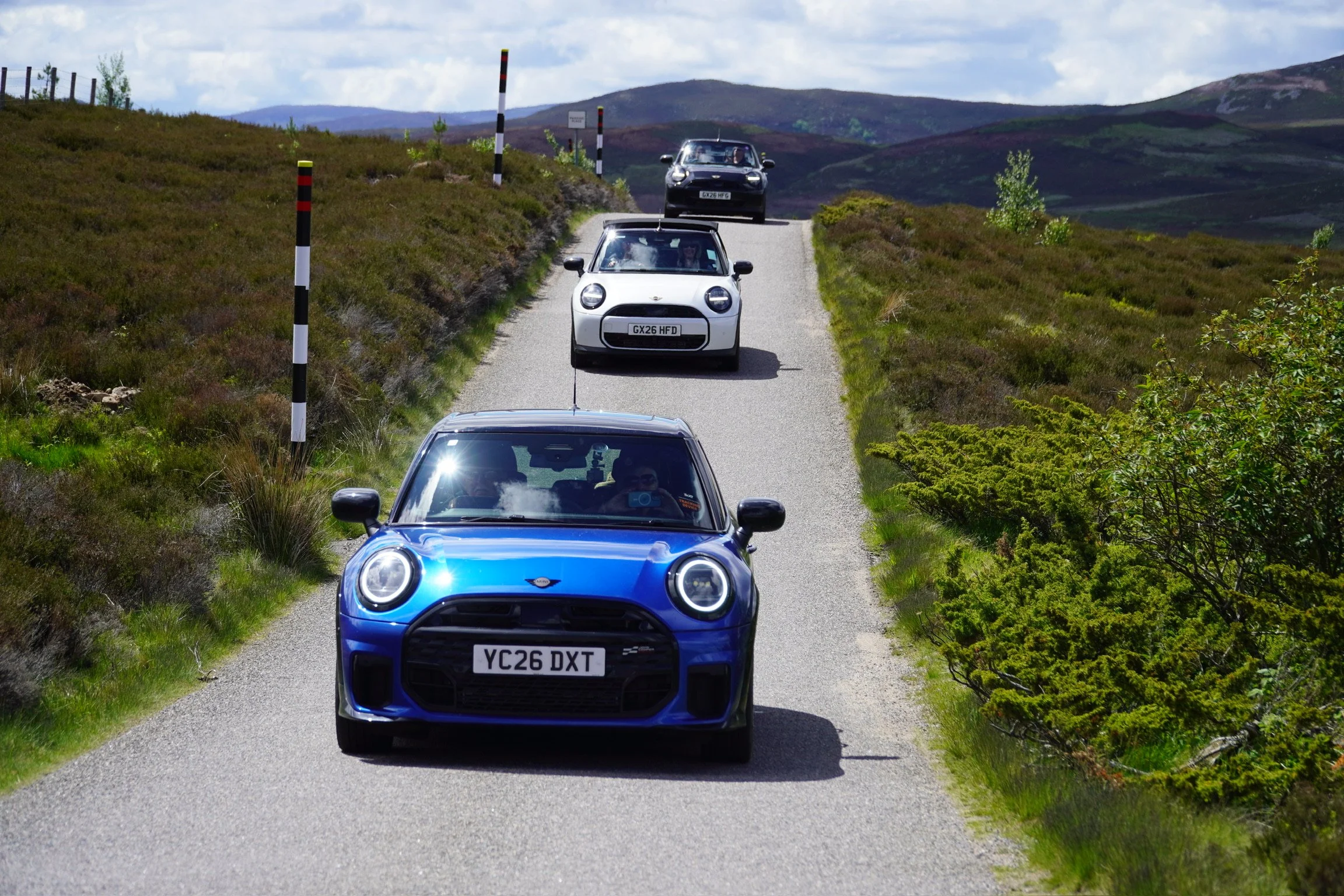
The next morning, we line the MINIs up outside reception, ready for our guests. We greet everyone at the cars, hand over the keys and talk through the driver briefing. Then it’s time to load the bags, settle into the cars and get ready to leave together. With everyone on board and the engines running, we’re finally set for the long drive north to Scotland. Let’s go!
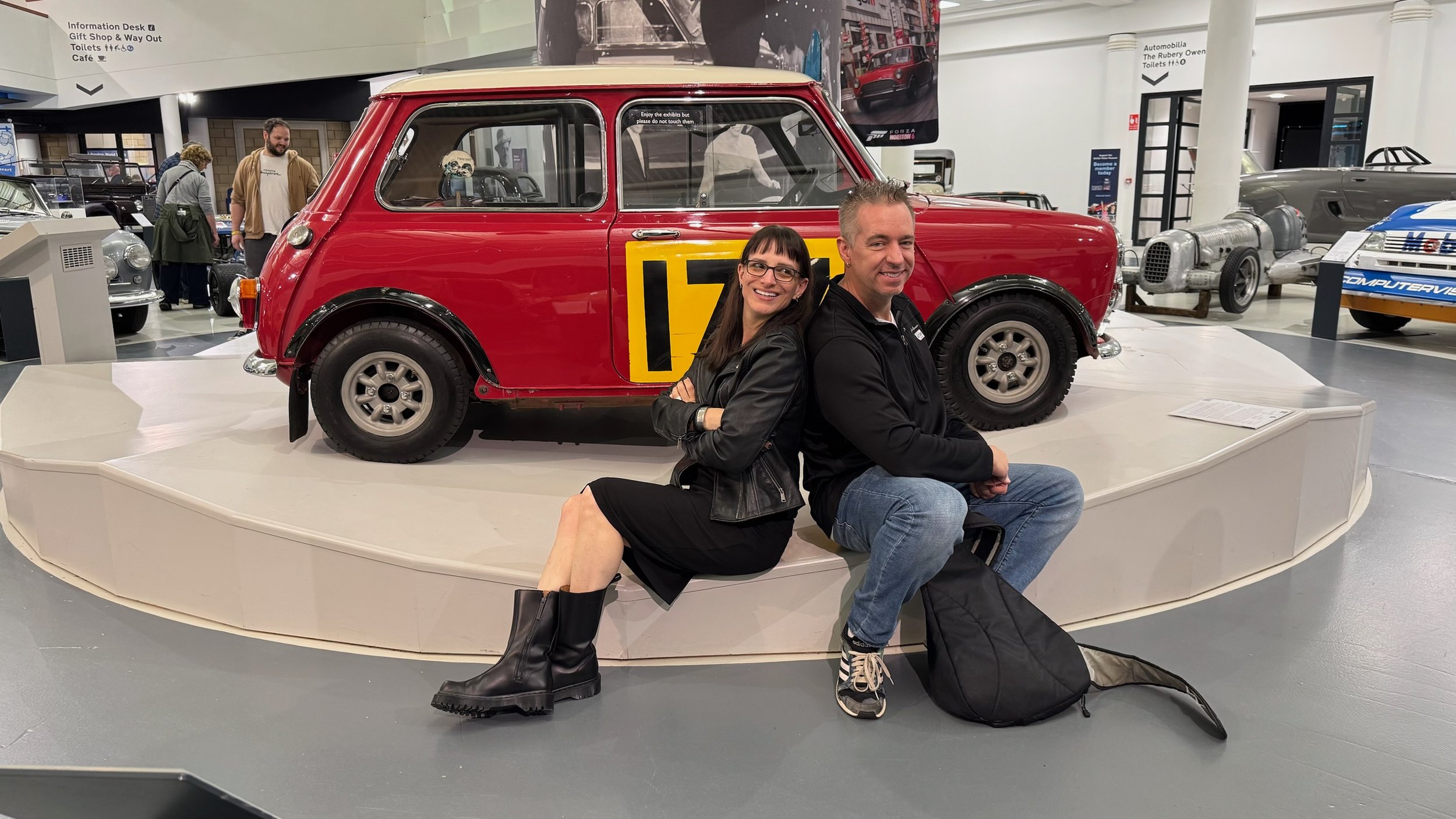
We break up the drive north with a visit to the British Motor Museum, a natural stop on a MINI tour. Inside, we find the three MINIs that won the Monte Carlo Rally, along with the very first Mini and the last classic Mini built at Longbridge. There’s plenty to see, and it’s a good chance to stretch our legs before setting off again.
From Warwickshire, we continue north through England towards Gretna Green. As the miles pass, the landscape begins to change. Built-up towns and villages gradually give way to rolling countryside, and with every mile the feeling grows that we’re heading somewhere more remote. The Scottish border is getting closer. We arrive at our hotel for the night, right on the border between England and Scotland, where a wee dram and a lovely group meal are waiting after a day of travel.
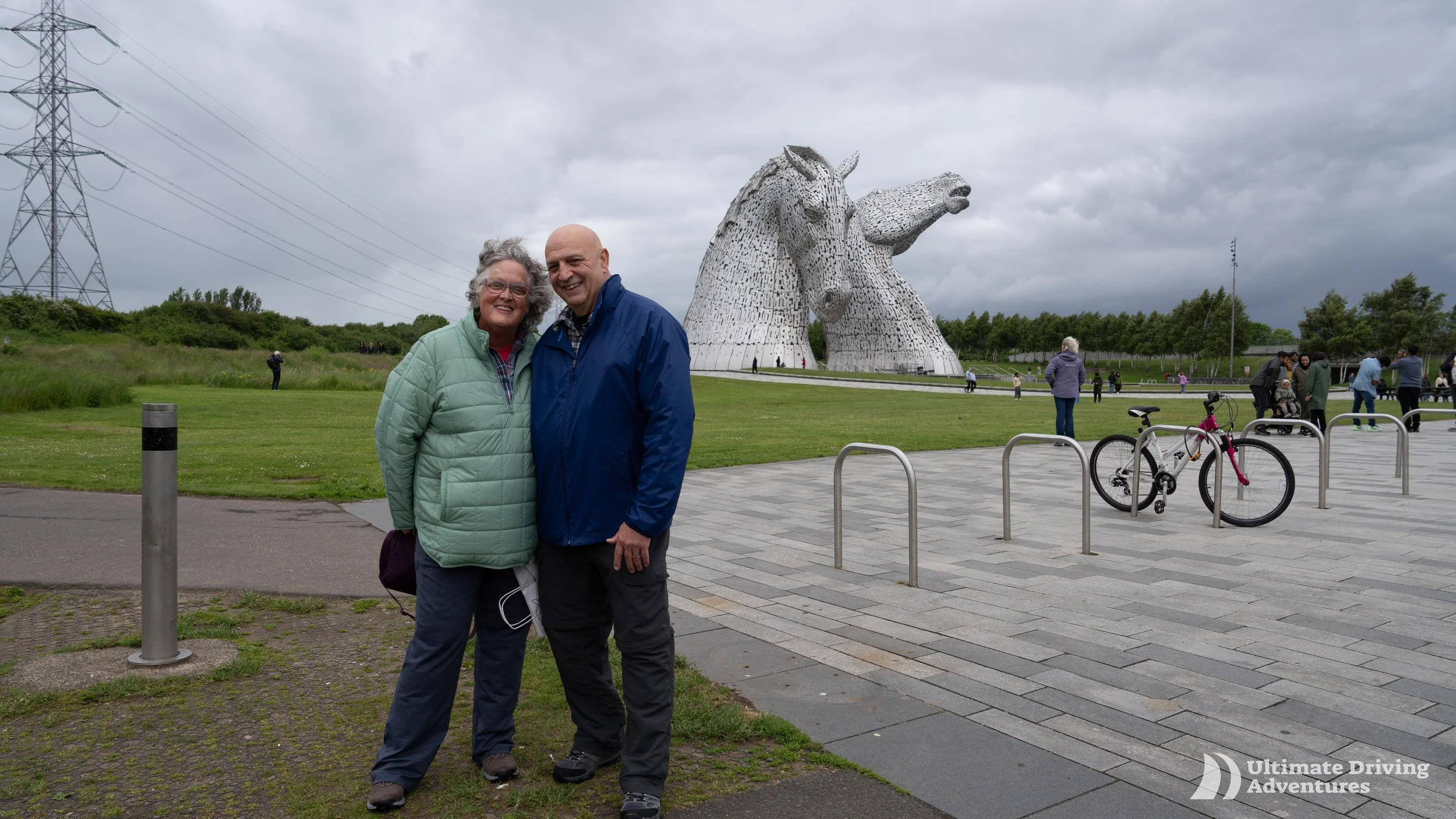
The next morning, we drive towards the Kelpies. Their huge steel forms rise above the surrounding landscape, and it’s hard to take in their scale from a distance. They are 30-metre-high horse-head sculptures by Scottish artist Andy Scott. Their name comes from the mythical water horses of Scottish folklore, while the sculptures themselves pay tribute to the Clydesdales that once pulled barges along Scotland’s canals and worked in the fields.
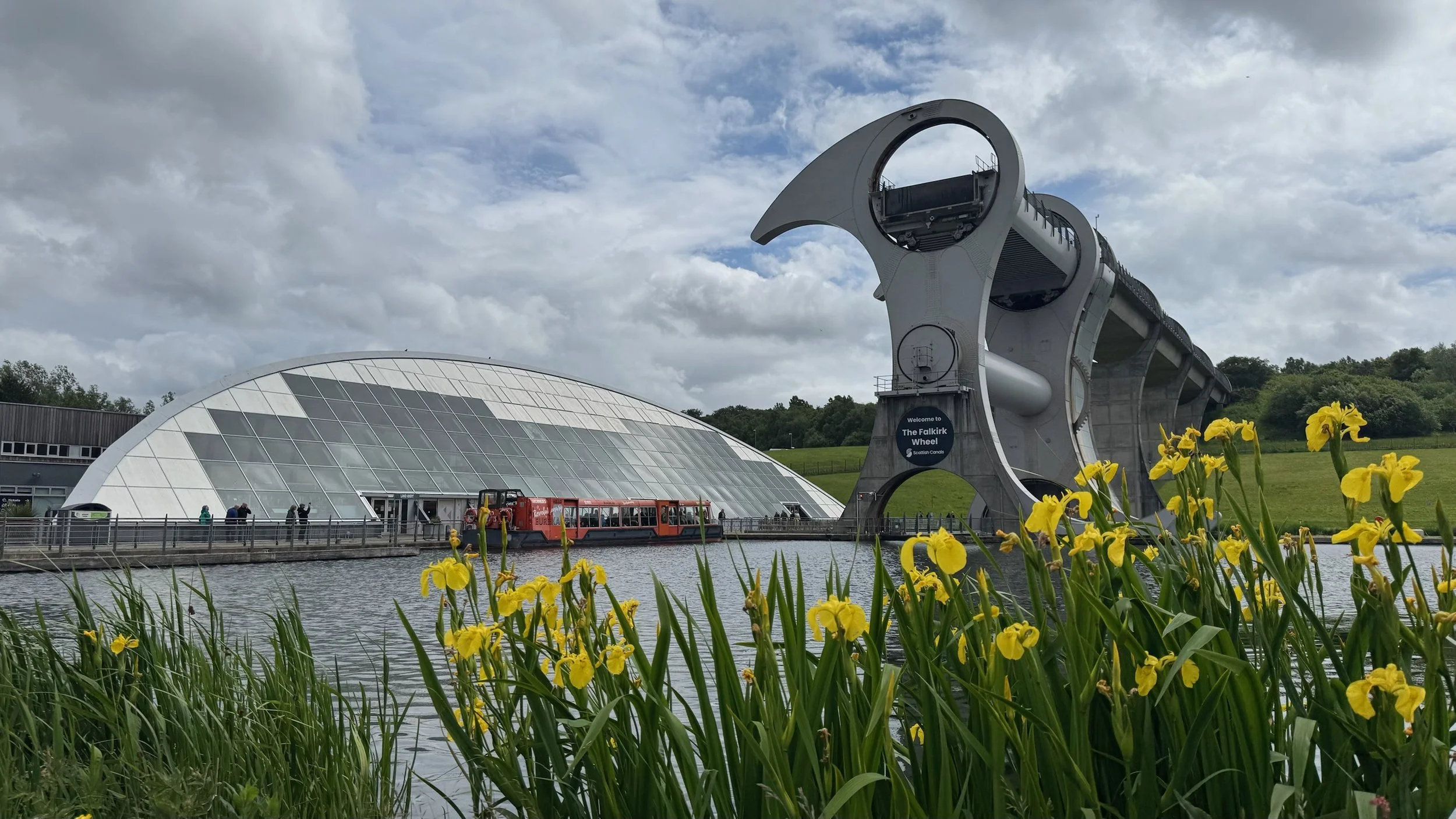
Not far away is the Falkirk Wheel, an extraordinary piece of engineering that lifts boats between the Union Canal and the Forth & Clyde Canal. Opened in 2002, it replaced the flight of 11 locks that had once joined the two waterways.
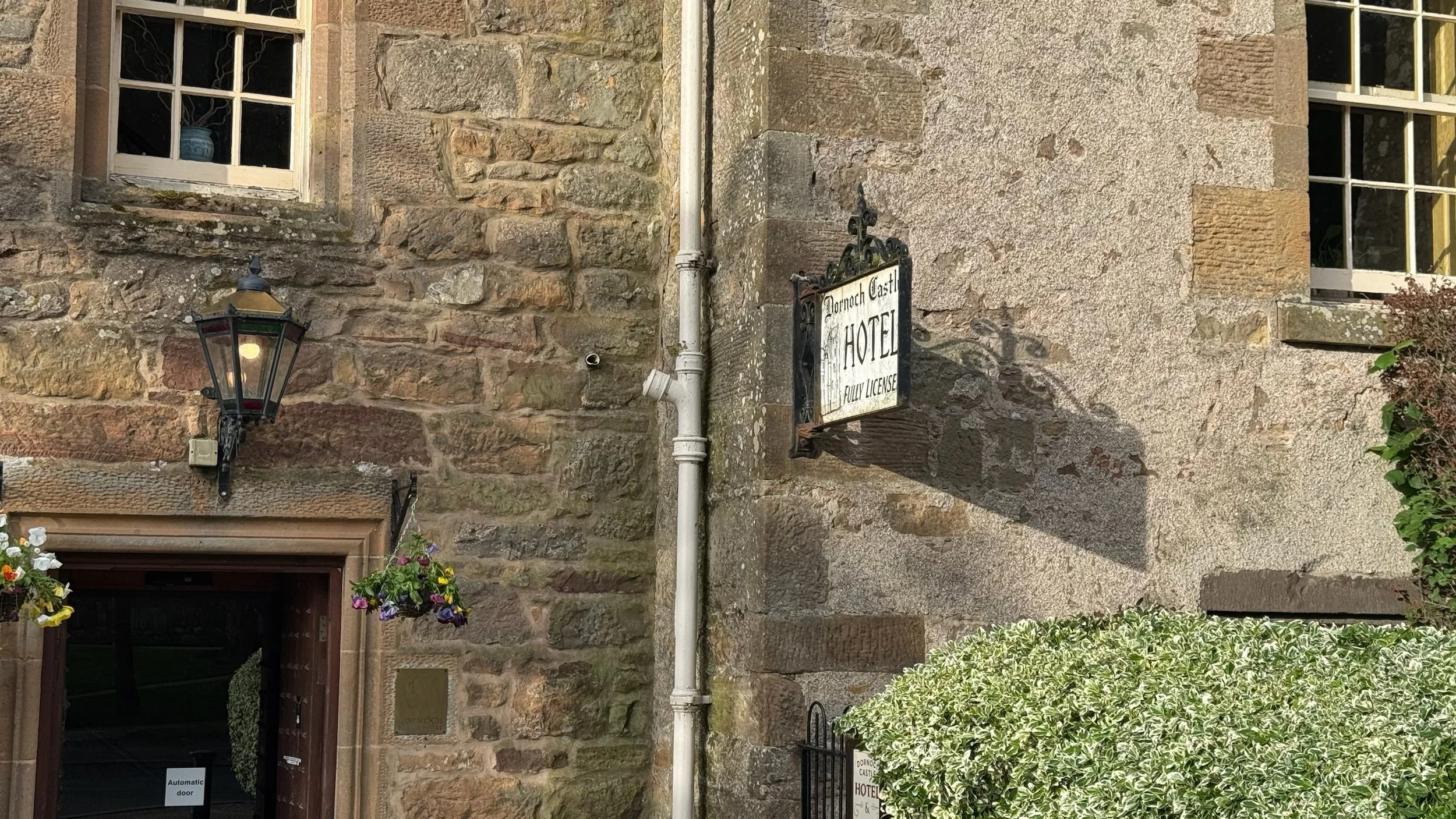
We’ve gone from racing history the day before to modern Scottish landmarks, and now the road turns towards the Cairngorms. The towns fall behind, the hills and mountains gather around us, and after the long drive we reach our castle retreat beside the river. It’s a former laird’s mansion, with Scots Baronial turrets and towers, set on an estate whose written history goes back to 1510. This is one of my favourite parts of the trip. A warm welcome and a cosy fire are waiting for us. It’s quiet and beautiful here, in the heart of the Highlands.
The Cairngorms provide the backdrop the following day as we leave our castle retreat and make our way towards Balmoral. The road takes us through Glenshee to Braemar, where we stop to refuel. Braemar is a small village in the heart of Royal Deeside, surrounded by mountains. It’s best known for the Braemar Gathering, the Highland Games that have drawn the Royal Family since Queen Victoria attended in 1848. It’s a lovely place to pause and take in the setting before we continue.
From Braemar, we follow the River Dee towards Balmoral. The river winds through the valley beside us, with wooded slopes rising on either side. Here, the woodland is a mix of native pinewoods and birch, with Scots pine among the trees. In places, the forest closes around the road; then it opens again to reveal the river and the hills beyond.
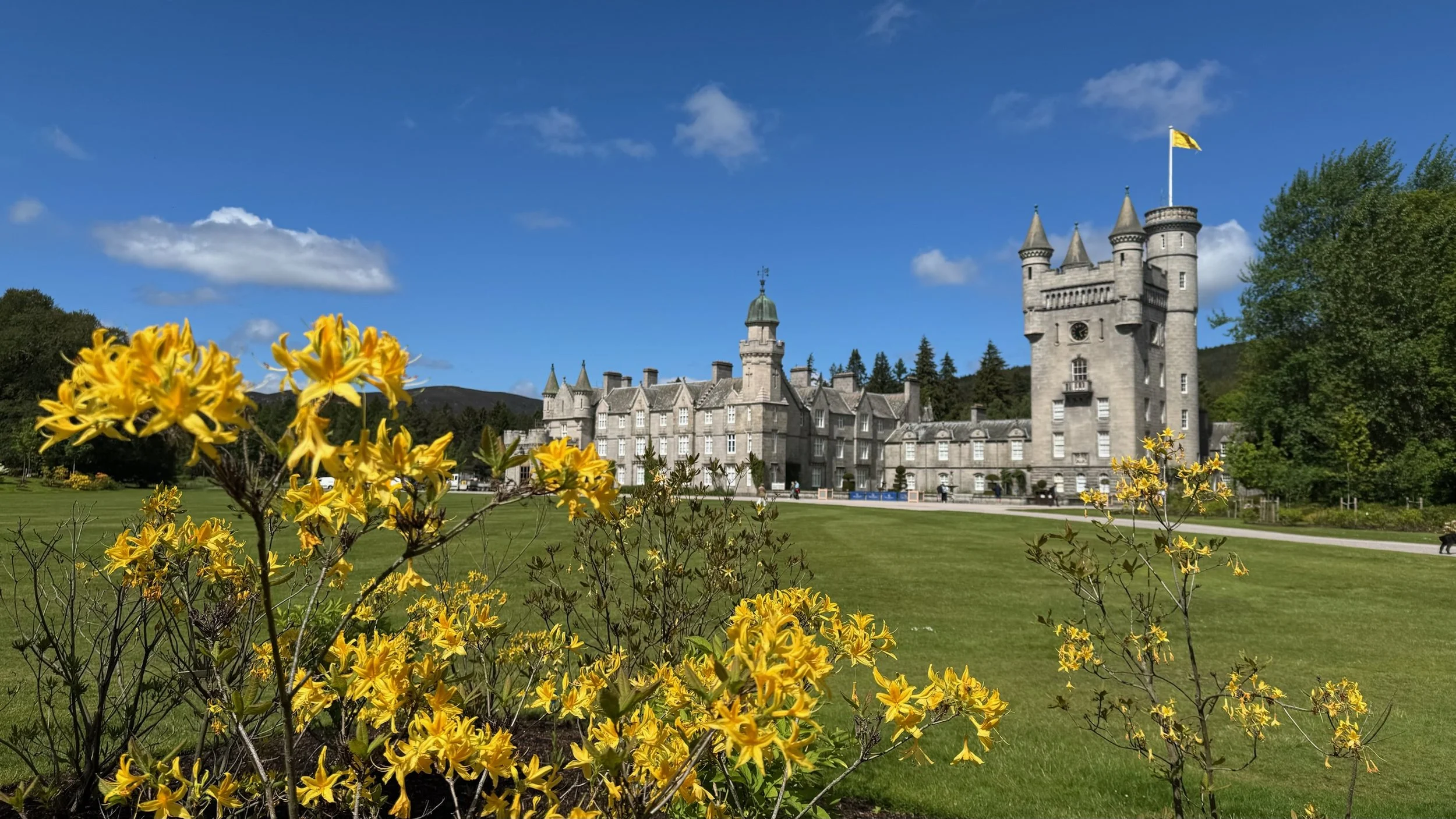
Balmoral Castle
We arrive at Balmoral, the Royal Family’s Highland home since Queen Victoria and Prince Albert bought the estate in 1852. After spending time at the castle, we’re back on the road and heading north again.
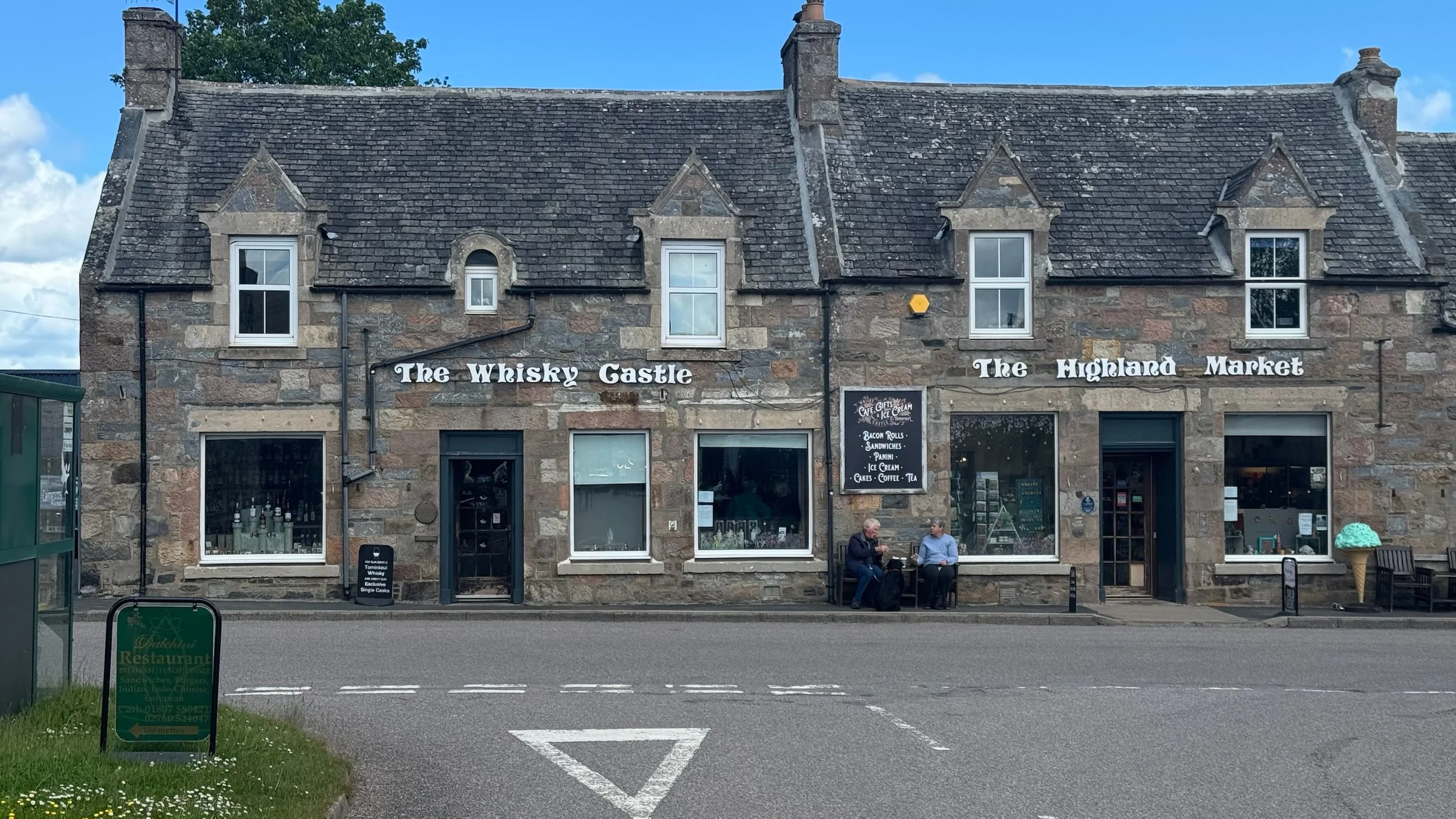
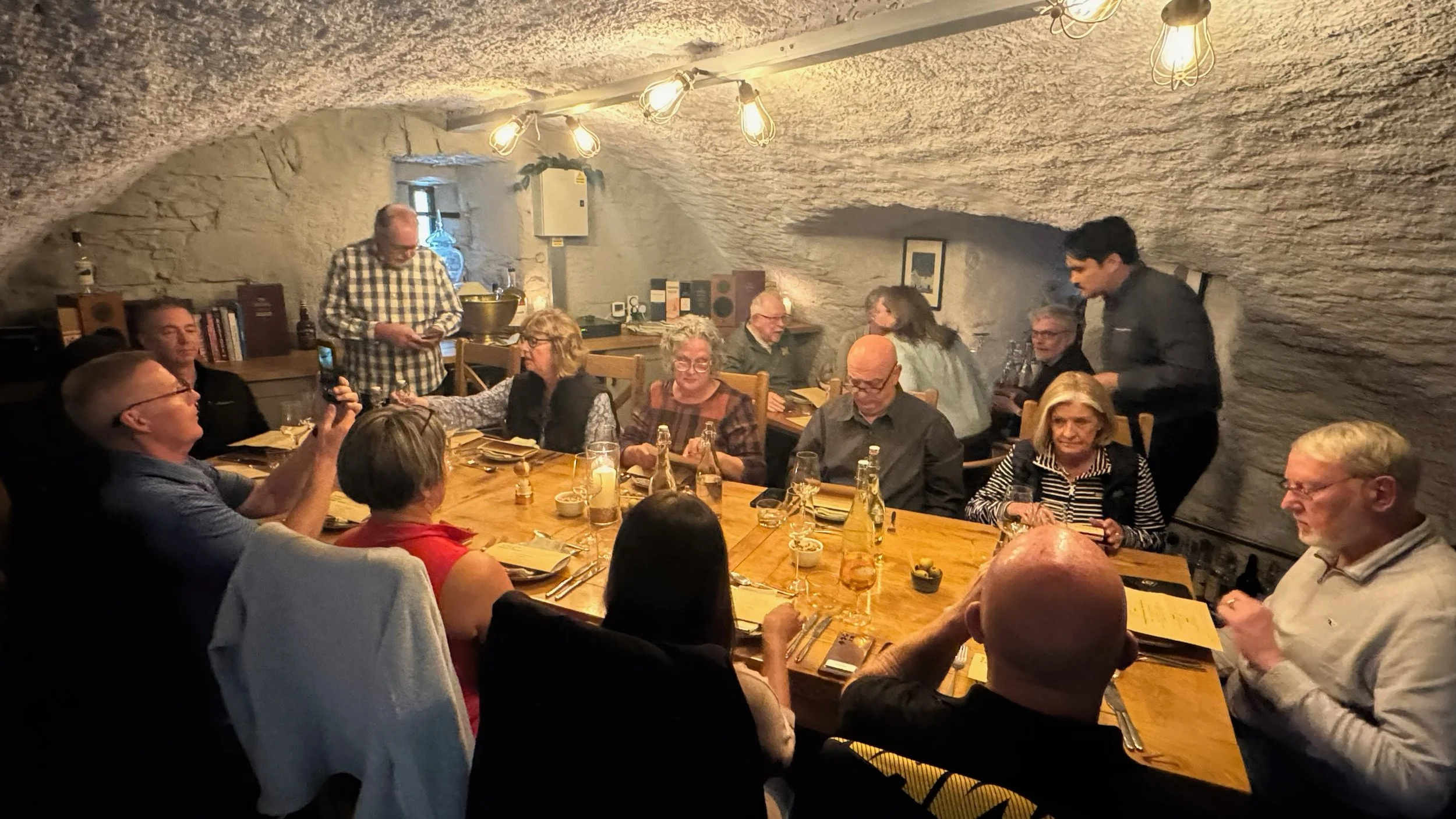
We stop at the Whisky Castle before heading north to join the NC500, north of Inverness. Our castle retreat for the night has its own whisky bar, and dinner is served to our guests in the medieval vault. With its stone walls and spooky surroundings, it’s a special setting for a grand feast, and an evening for them to enjoy without their hosts.
We meet up after dinner and share a few Negronis. Made with gin, Campari and sweet vermouth, it’s a bold, bittersweet Italian cocktail said to have originated in Florence in 1919. It’s a lovely end to a day of mountain roads, woodland and river scenery.
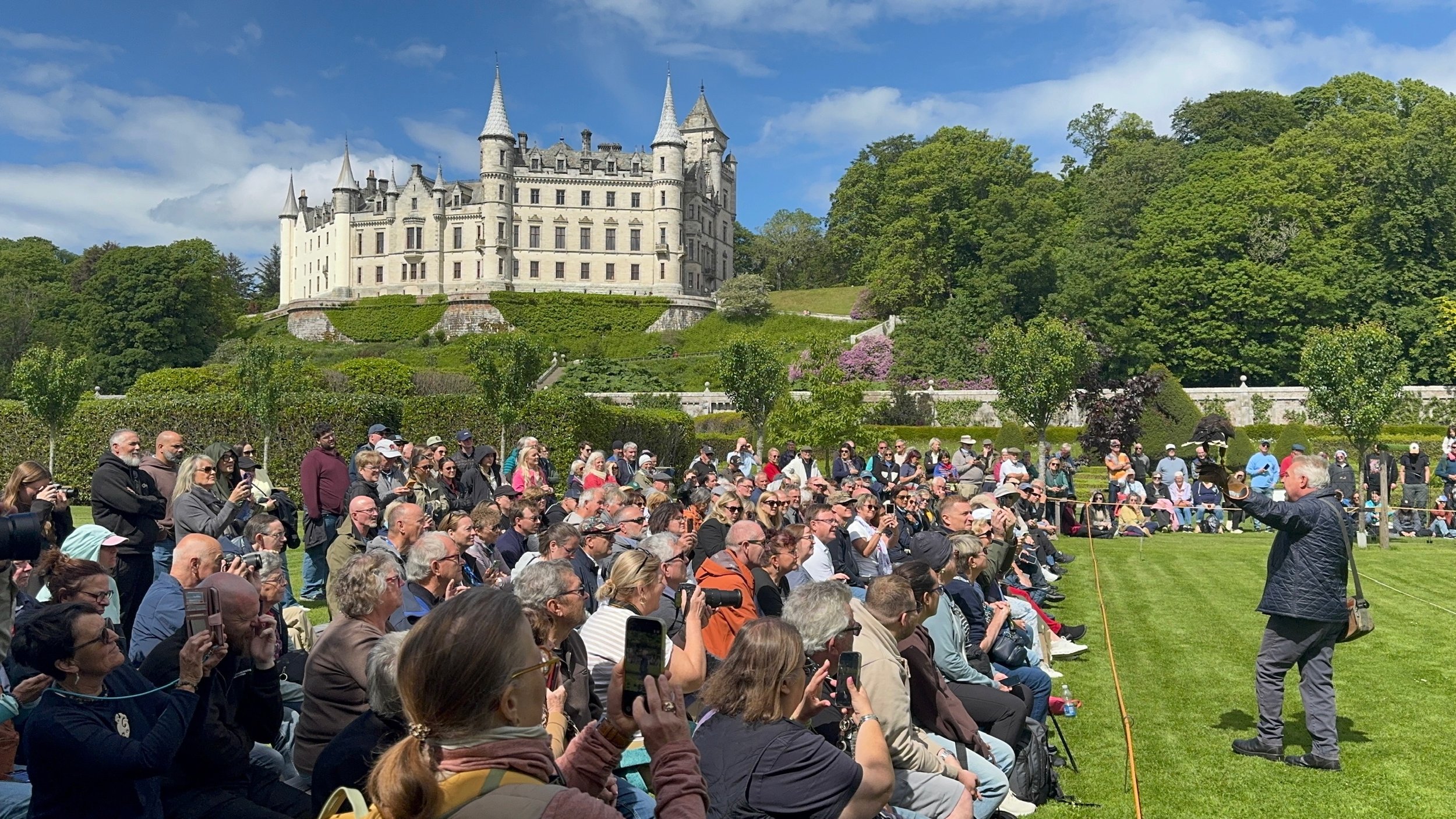
The next morning, we head to Dunrobin Castle, the historic home of the Earls and Dukes of Sutherland. The earliest parts of the castle date back to the early 1300s, though it has been enlarged and remodelled over the centuries. Its fairytale towers and spires rise above the Moray Firth, giving it the look of a castle from another time.
Our guests explore inside, grab a coffee and make their way through the magnificent gardens to the falconry display. The gardens were laid out in the 19th century, inspired by Versailles, with formal terraces and fountains looking out towards the sea. The weather is glorious, and the morning’s display is brilliant. The falconer introduces the birds and explains how they hunt; then we watch them sweep and circle over the gardens, showing their speed and agility. It’s a wonderful way to experience the grounds.
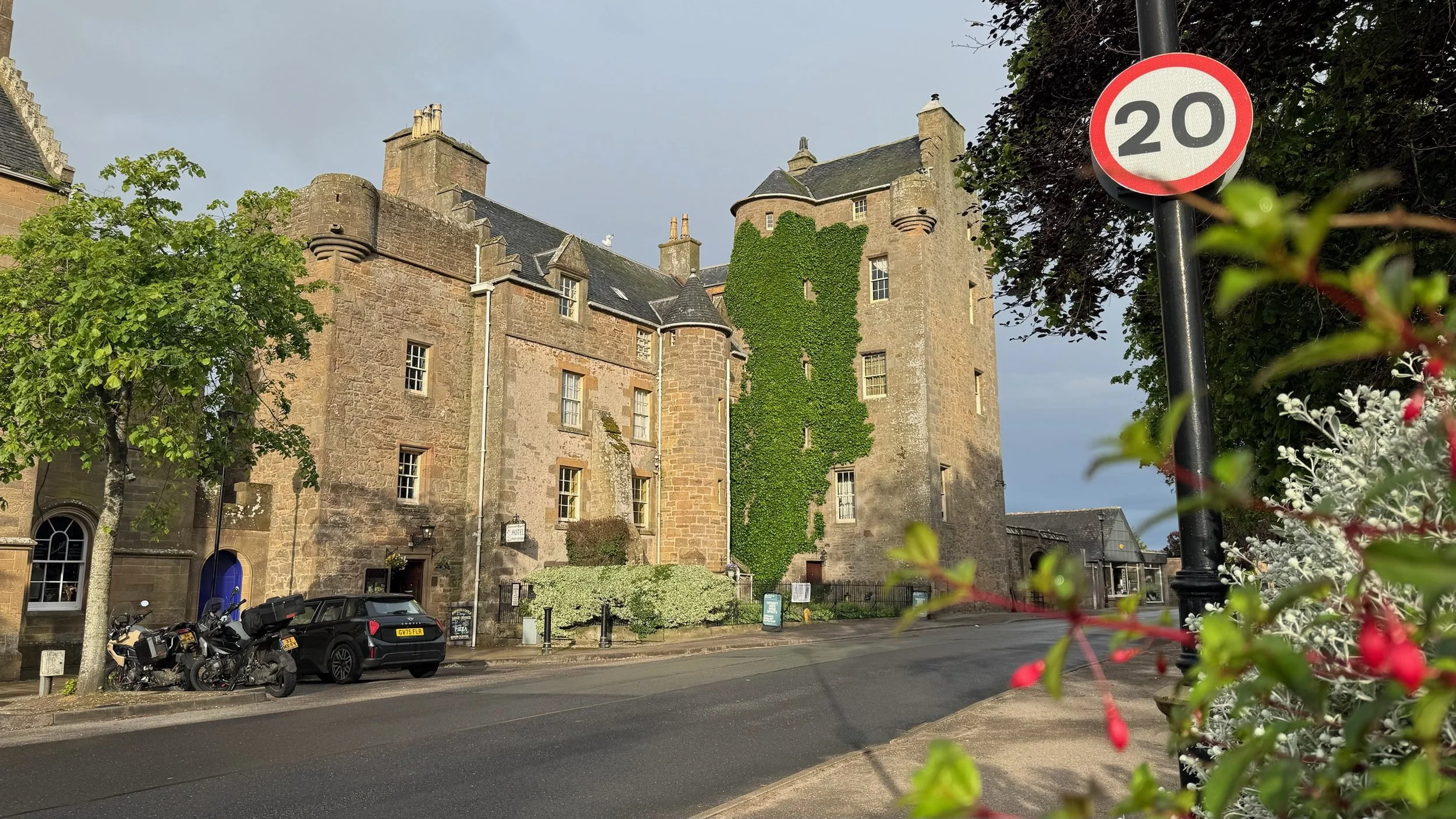
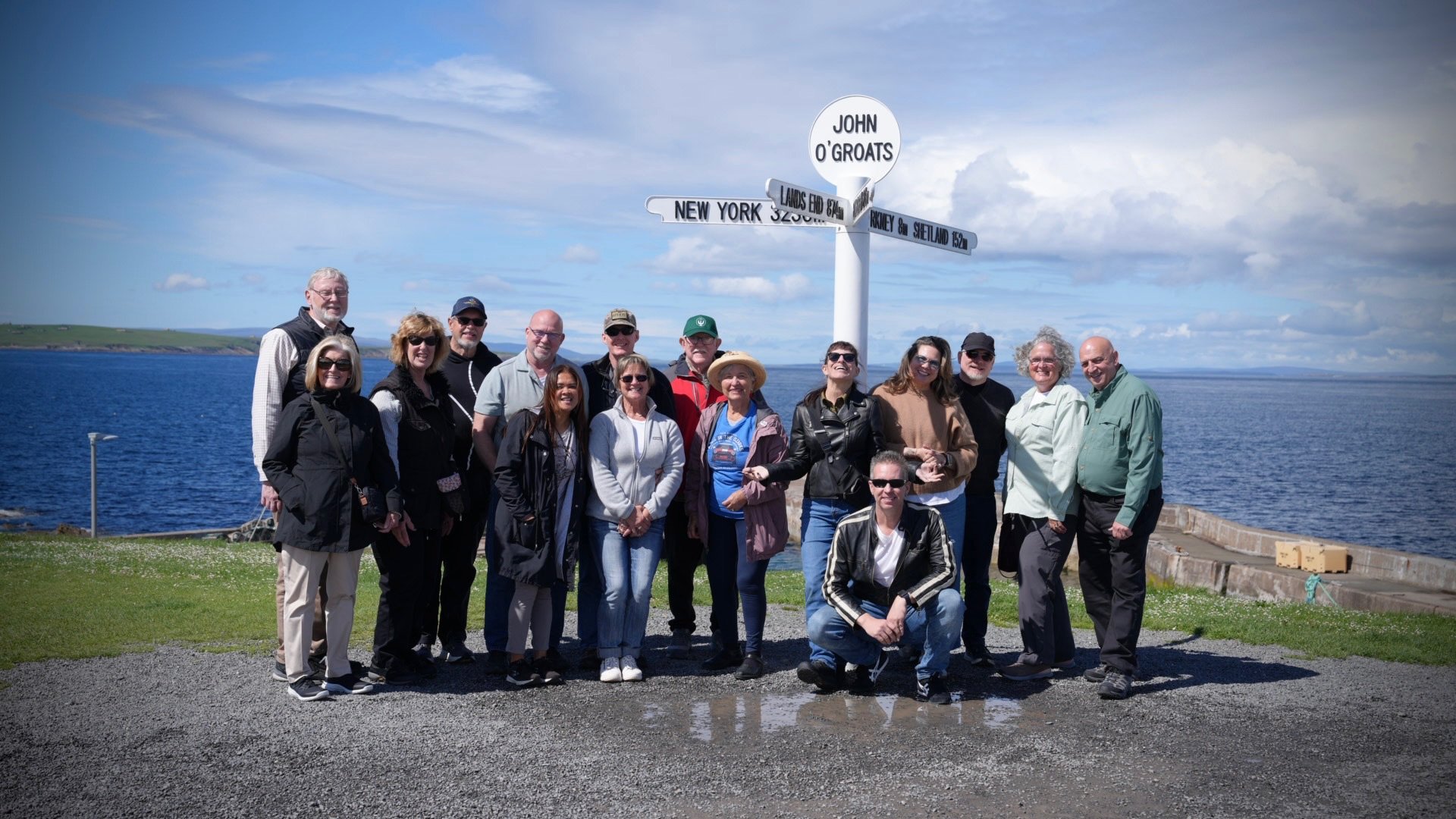
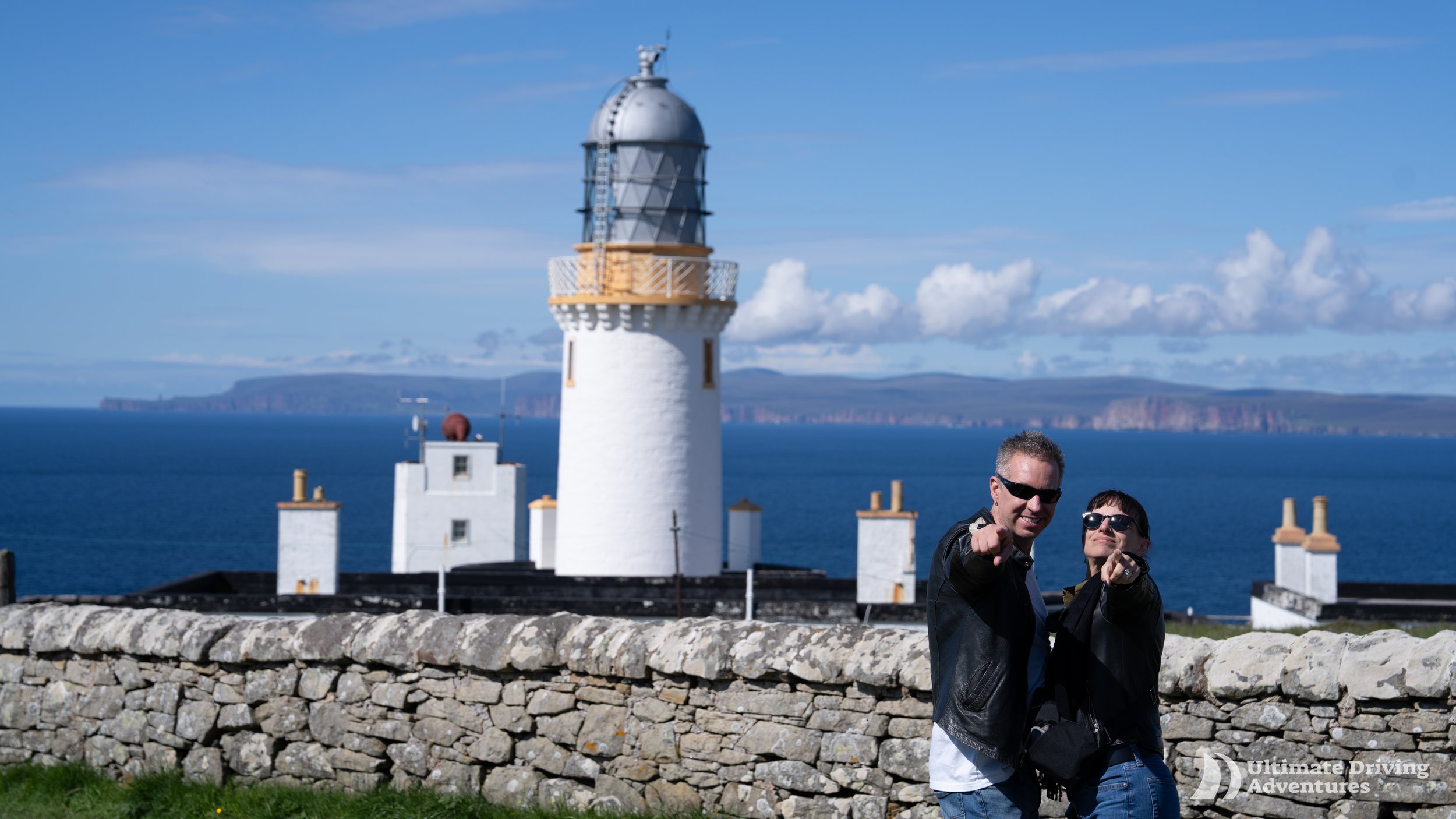
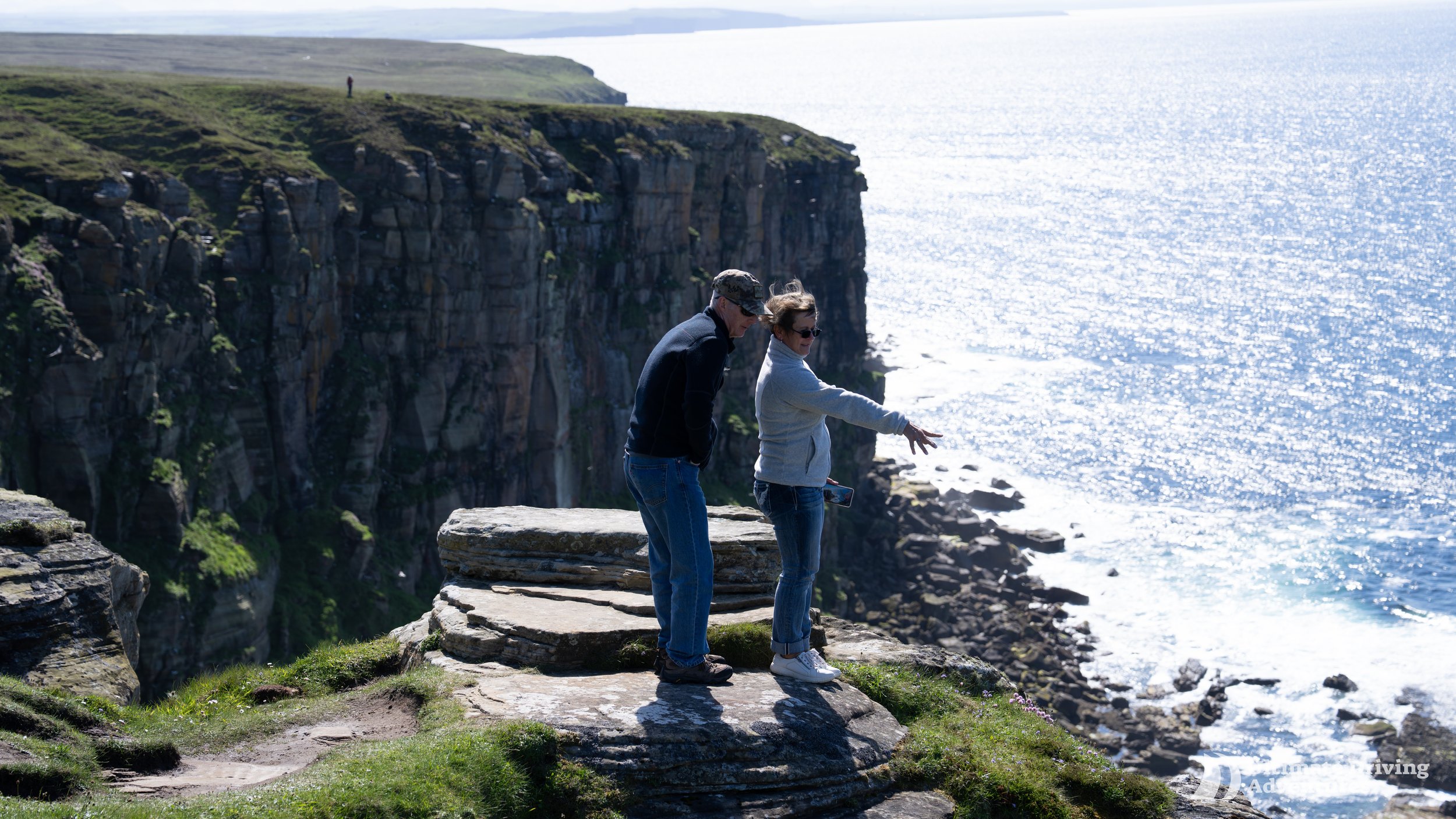
Then we set off north, stopping in Wick to pick up supplies before taking in John O’Groats. From there, we continue to Dunnet Head, the most northerly point on mainland Britain. The lighthouse stands above the cliffs, with the sea stretching out around us. We take time to look for puffins nesting along the cliff edge and enjoy the wild, open feel of this stretch of coast. By evening, we reach our next stop, where a private tasting of local Scottish gins is waiting before dinner.
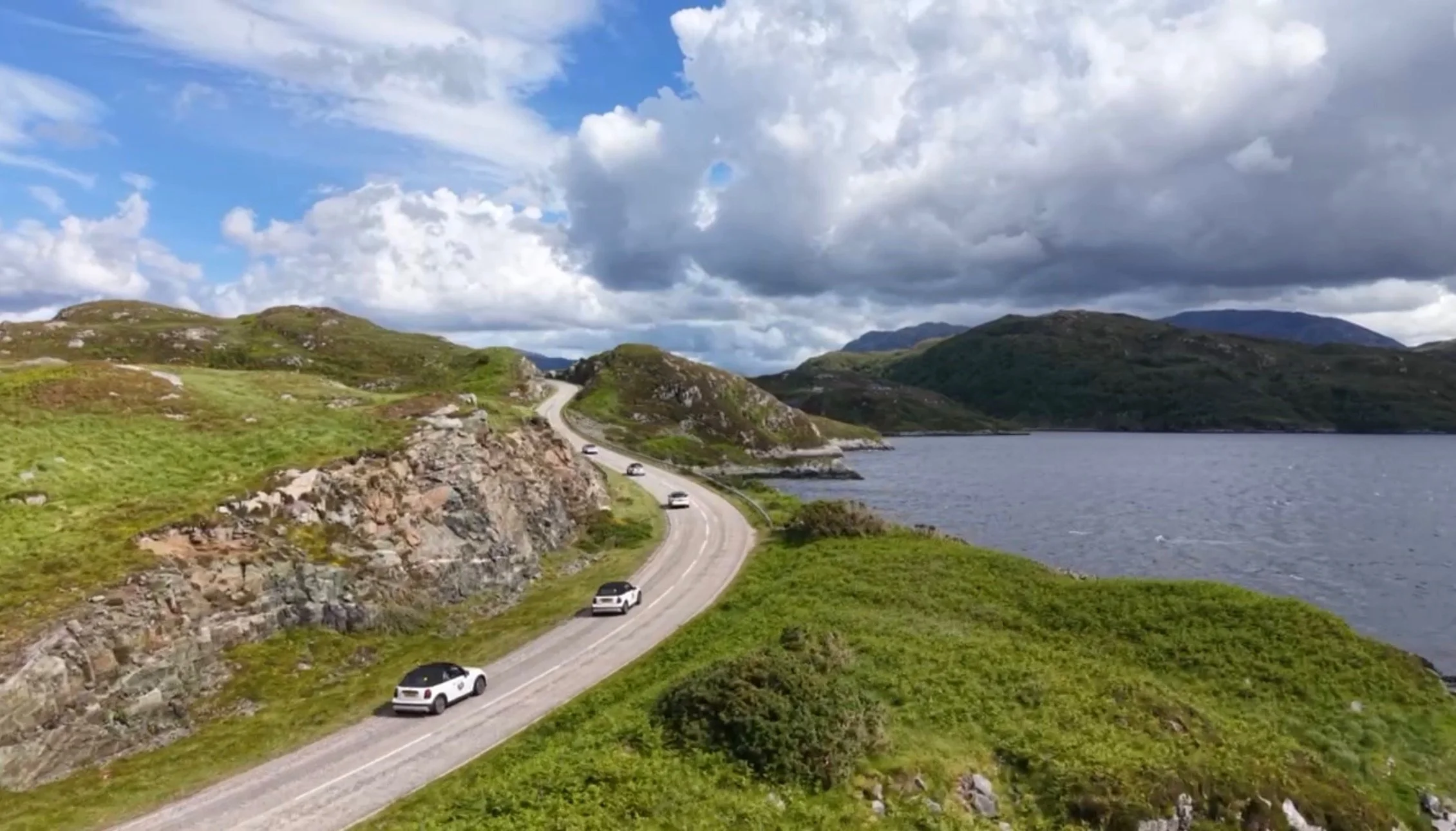
Today is one of my favourite driving days. We take the NC500 along Scotland’s northern coastline, where the change in landscape is dramatic and the roads are simply spectacular. The route winds between open moorland, rocky hills and wide views of the sea. In places, the road narrows to a single track, so we slow down, use the passing places and take in the scenery as we go.
We stop at Durness Beach, where pale sand meets clear water beneath the wide northern sky, then continue to Smoo Cave. The enormous entrance has been carved into the limestone by the sea, and inside, freshwater from the land falls into the cave. It’s a striking place, shaped over thousands of years by the meeting of the sea and the landscape around it.
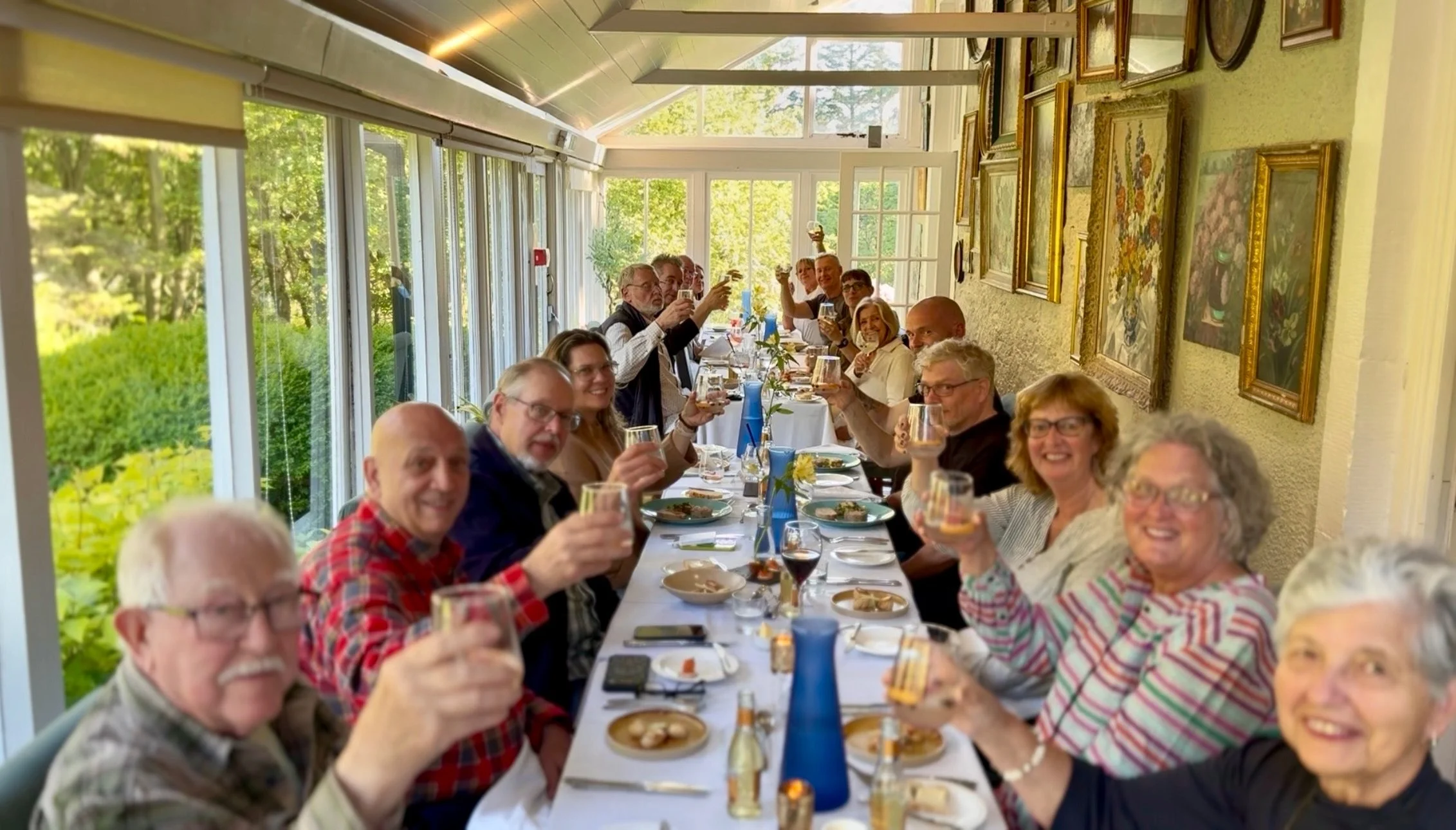
Gin tasting at our hotel
Afterwards, we call in at Cocoa Mountain, a specialist chocolatier founded in Durness in 2006. It’s an unexpected treat in this remote corner of the Highlands, and a welcome chance to pause before getting back on the road.
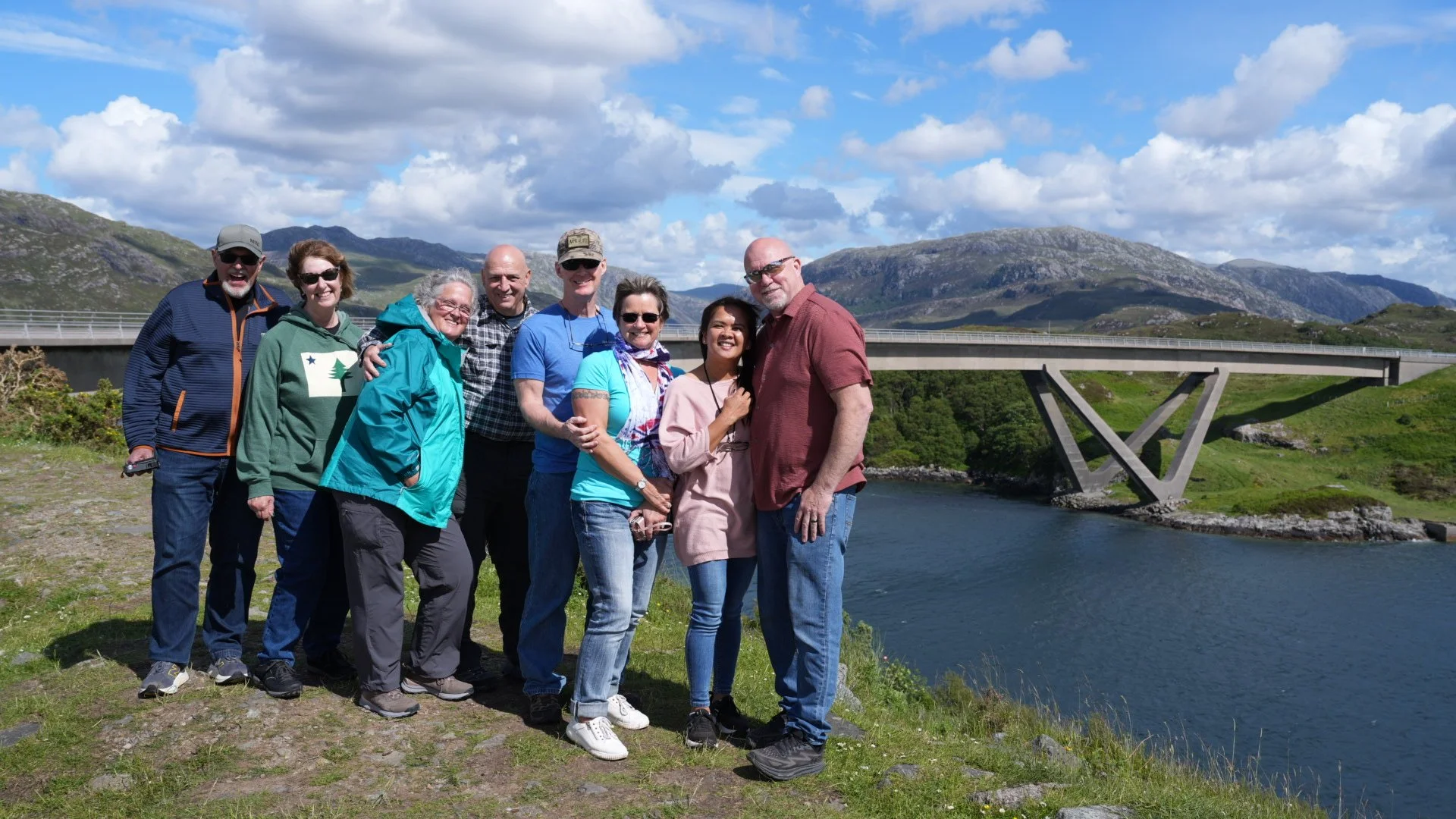
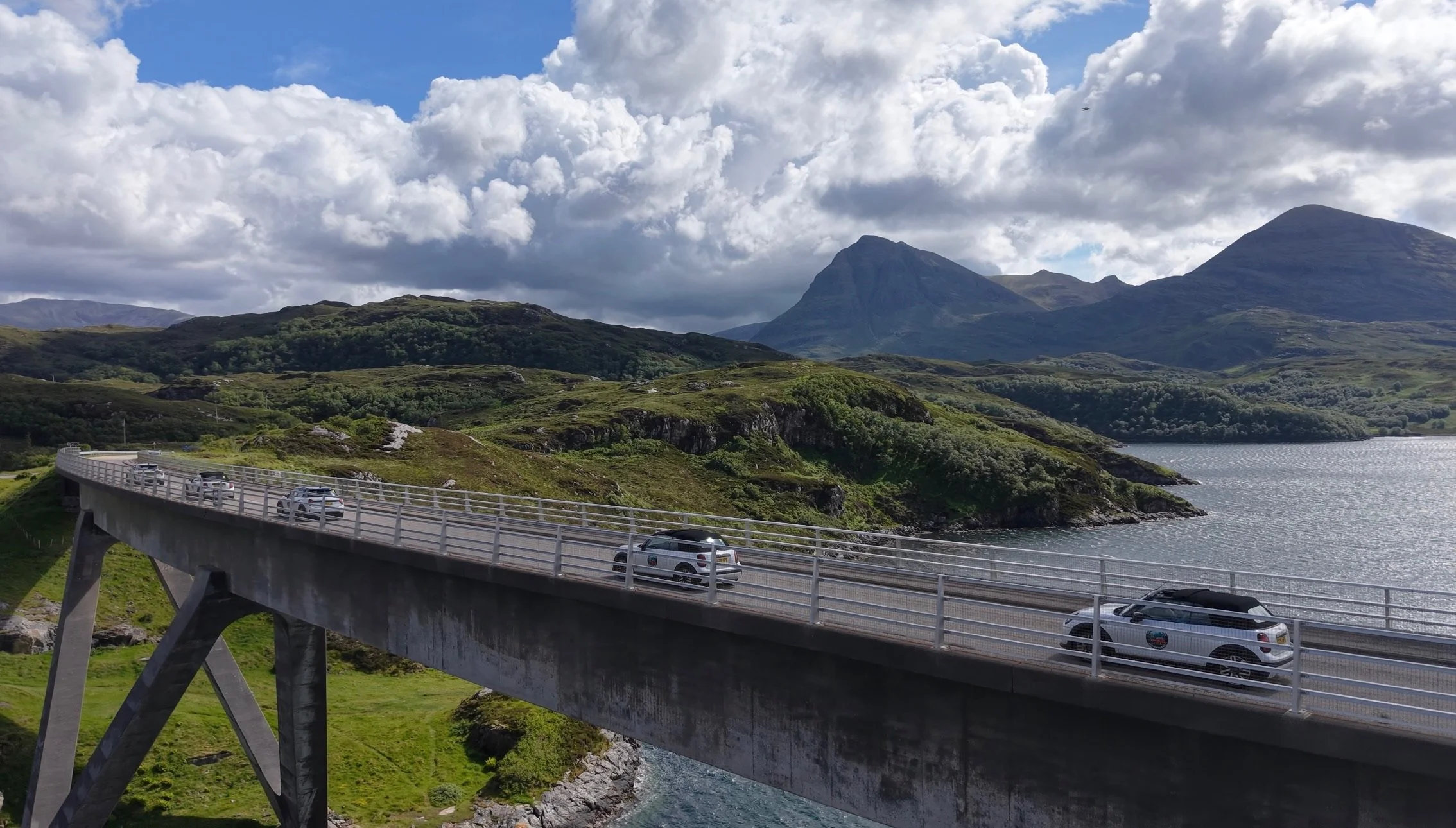
As we continue south, the road brings us to Kylesku Bridge. Its graceful curve sweeps across the sea loch, connecting stretches of the north-west coast that were once linked by ferry. Opened in 1984, it’s an impressive piece of engineering and a wonderful place to stop and look out across the water. By the time we reach our accommodation in Lochinver, we’ve had a full day of extraordinary roads, dramatic coastline and views that will be etched in our memories.
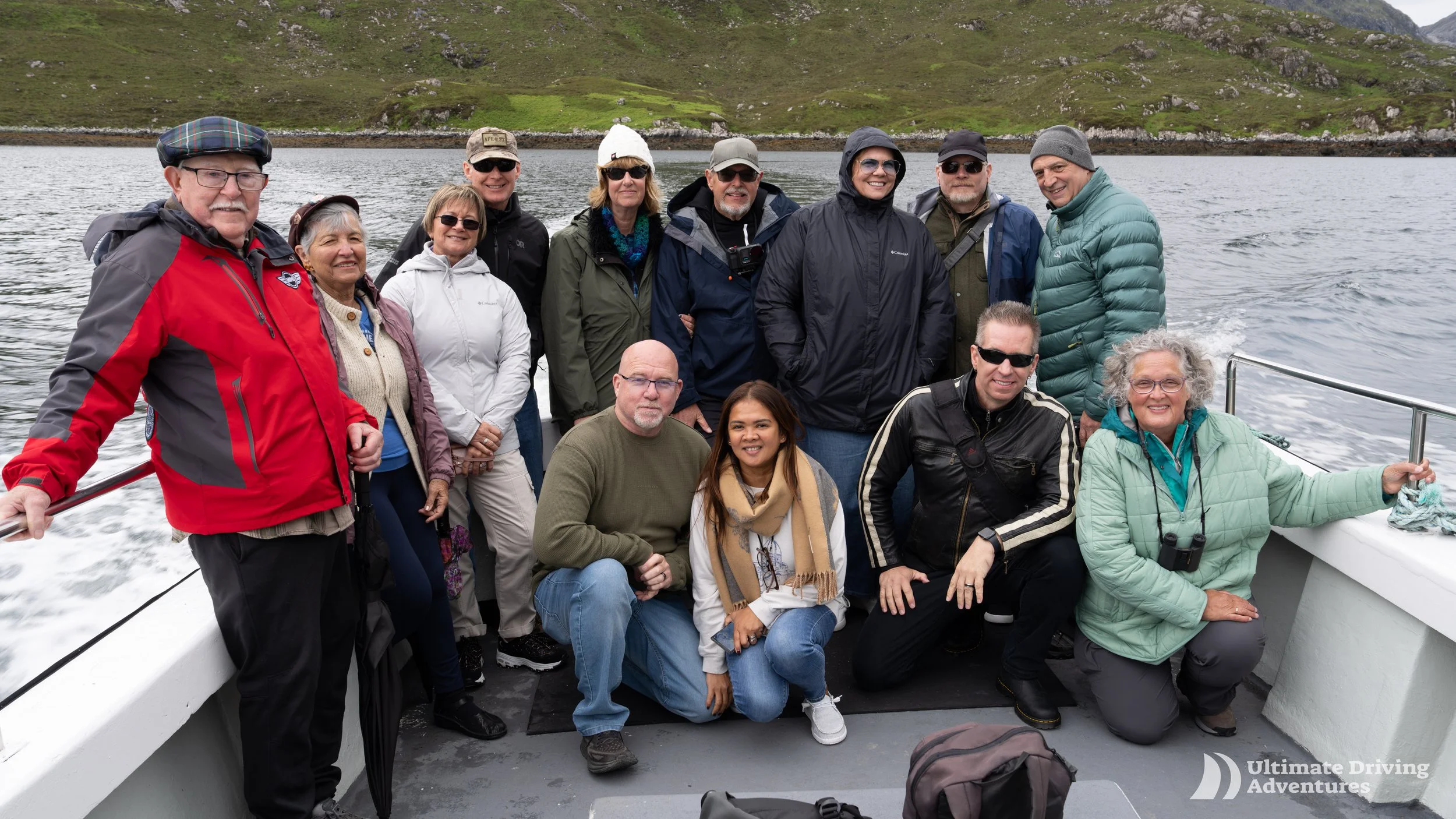
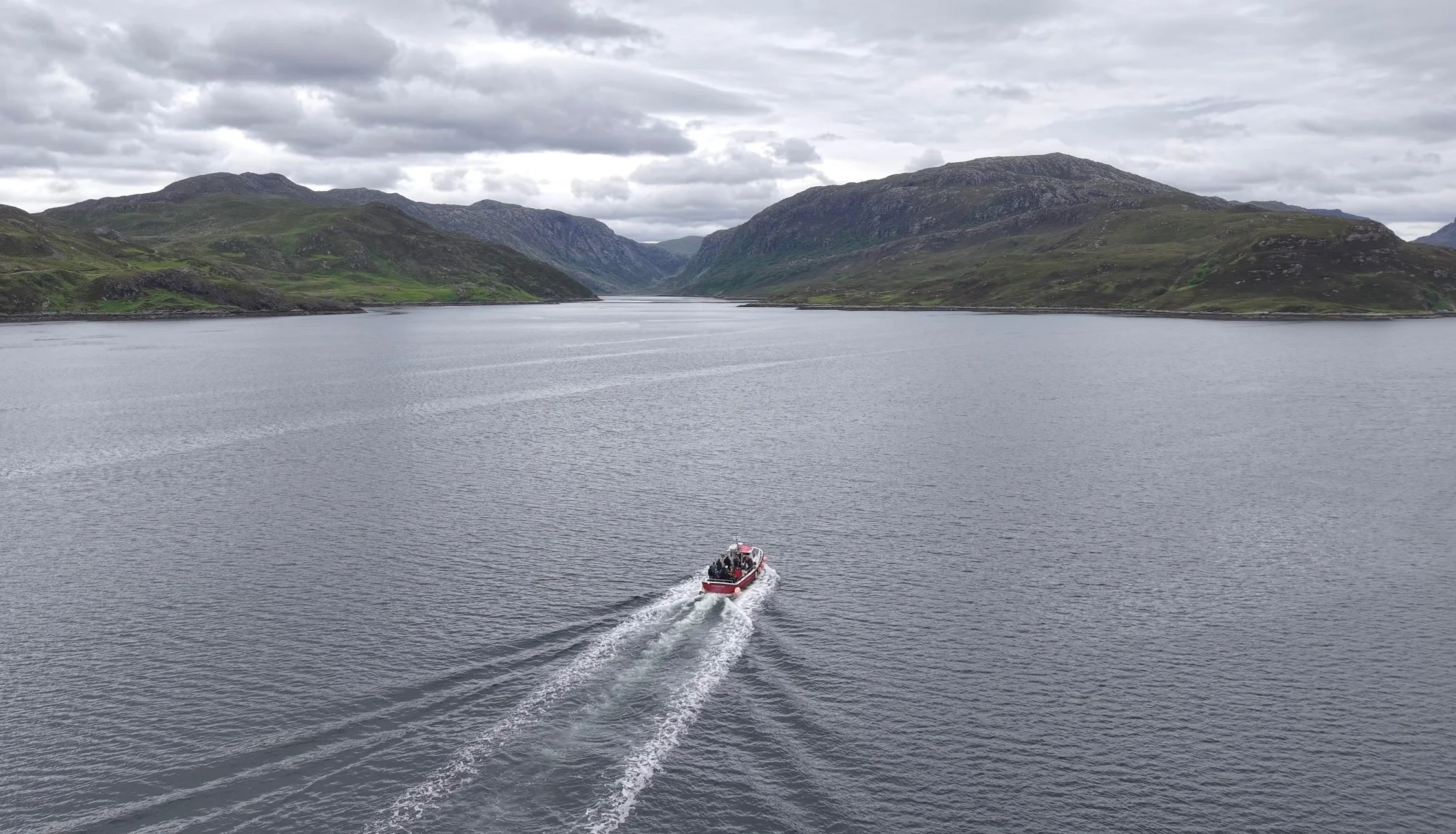
Lochinver is our base for two nights, giving us time to explore this part of the coast without packing up and moving on each day. The following morning, we head back north towards Kylesku for a boat trip with Skipper Steve. From the water, the scale of the sea lochs and the steep-sided hills around them becomes even clearer. We keep watch for seals resting on the rocks and seabirds along the shore as we travel into Loch Glencoul. The boat also gives us a view of Eas a’ Chual Aluinn, the UK’s highest waterfall, which drops around 200 metres down the hillside.
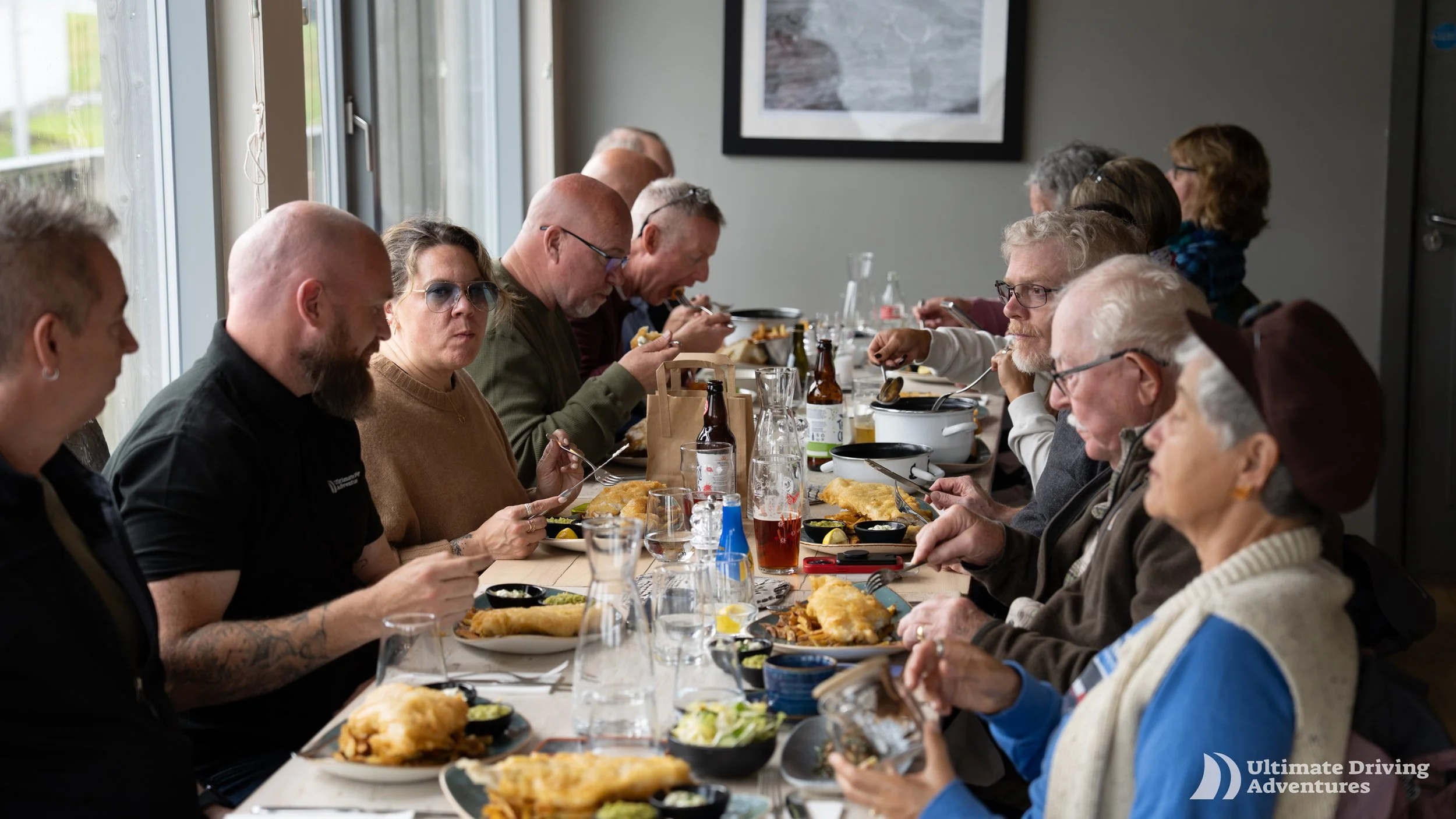
Afterwards, we have a special lunch beside the loch, with fresh seafood and a wonderful view across the water. Then we take the winding B869 back towards Lochinver, a quieter, off-the-beaten-track section of the NC500. The narrow road twists through the hills and small coastal settlements, with passing places and views opening up over the sea. We stop at Clachtoll Beach, where white sand and turquoise water sit beneath the rugged headlands, with the distinctive Assynt mountains beyond. It’s a very different way to experience the route: time on the water, a leisurely lunch and then a memorable drive back through some of the most striking scenery of the tour.
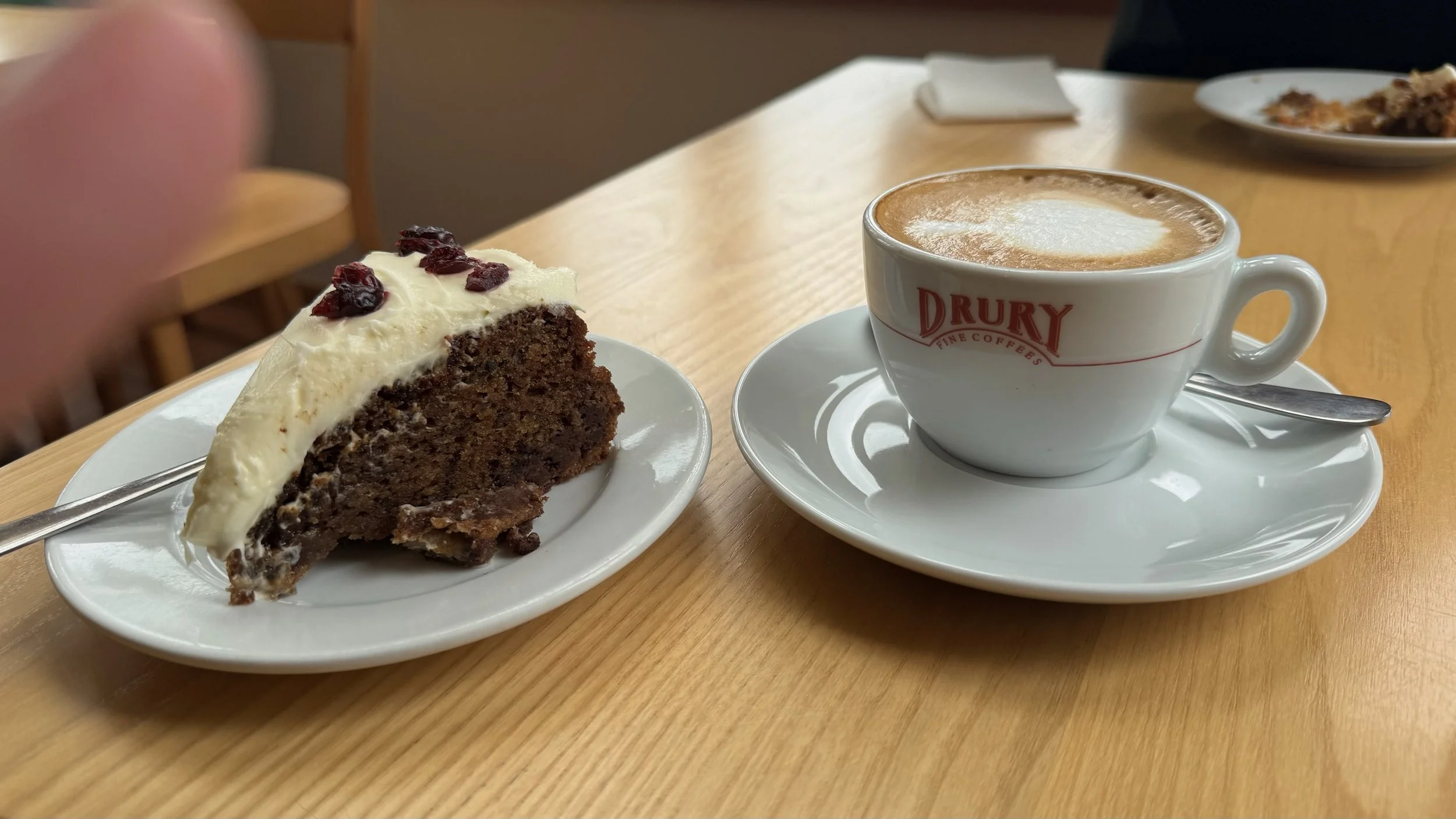
We leave Lochinver and make our way to Ullapool, a small harbour town on Loch Broom. It was laid out in 1788 as a fishing port, and the harbour is still at the heart of the village. We stop for coffee and have time to wander along the waterfront before continuing south.
At Aultbea, we visit the Arctic Convoy Museum. During the Second World War, Loch Ewe was a key gathering point for the convoys carrying supplies to the Soviet Union. The ships sailed through some of the most dangerous waters of the war, and the museum brings that story to life. One of our guests finds a ship that a family member had sailed on. Seeing them make that connection with someone from their family’s past is a very special moment for us.
We continue to Inverewe for lunch in the gardens. Osgood Mackenzie began creating them in the 1860s on a rocky, exposed stretch of coast. The mild climate, helped by the Gulf Stream, allows plants from around the world to thrive here, making the garden feel quite different from the surrounding Highland landscape.
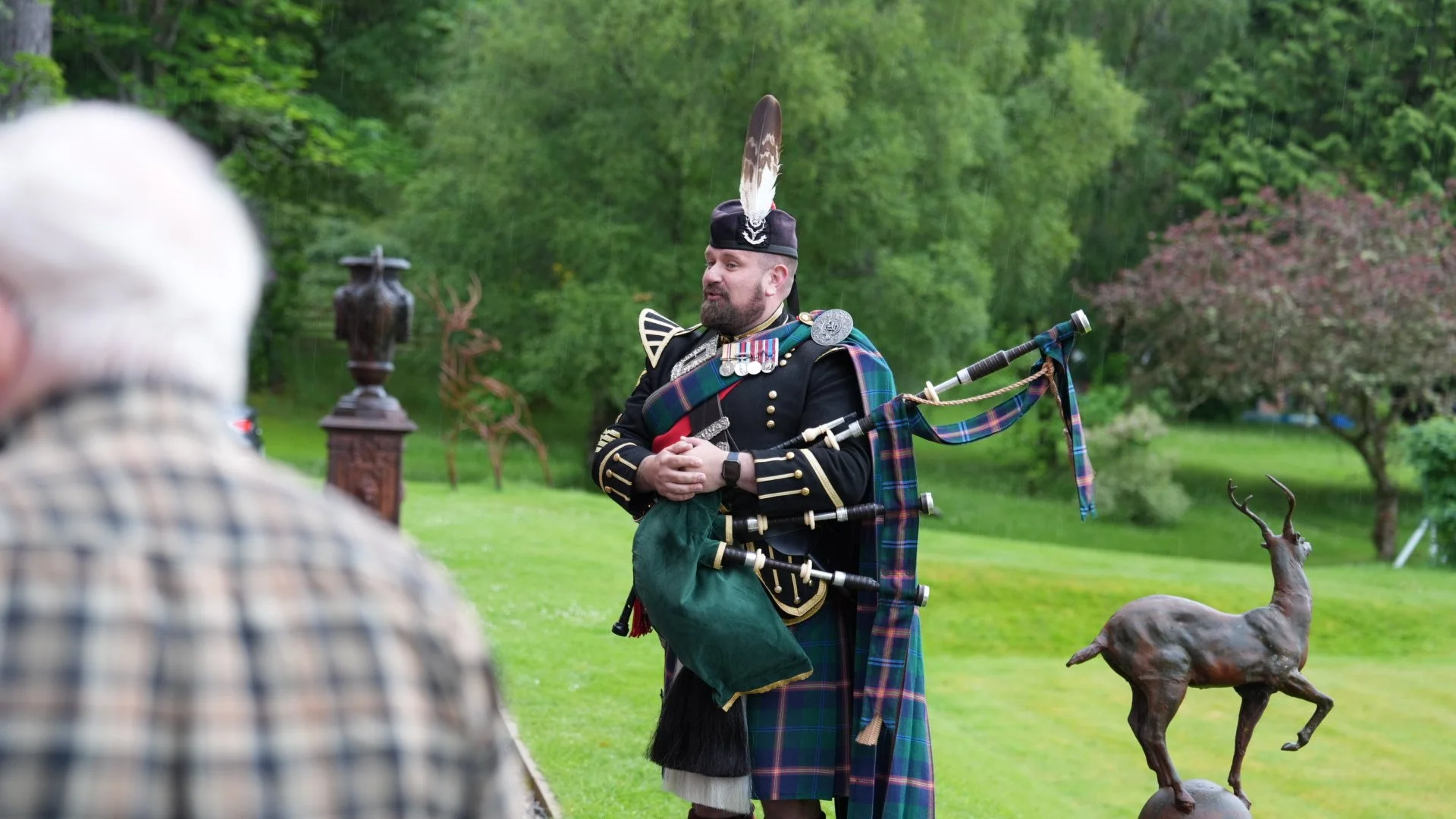
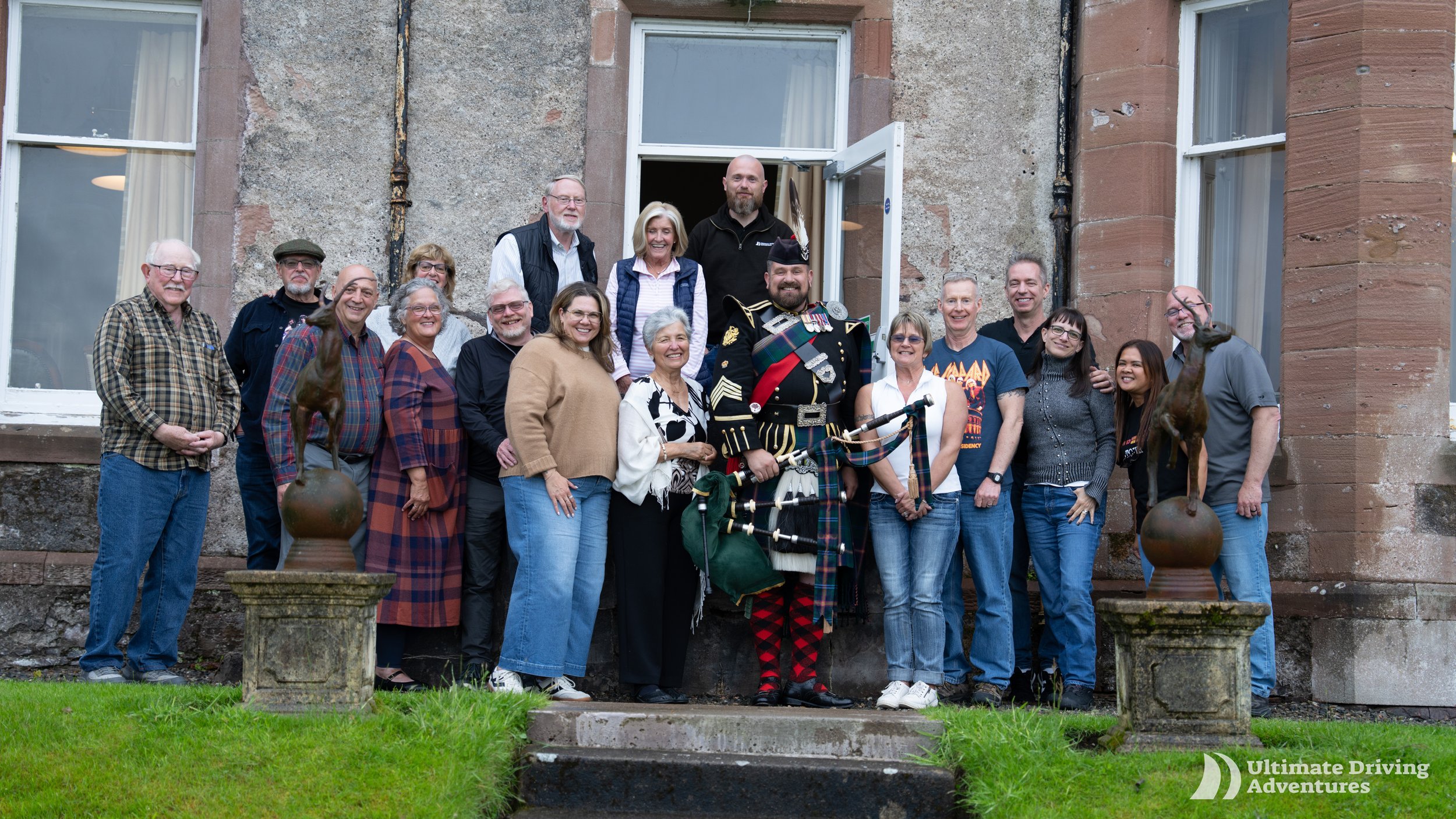
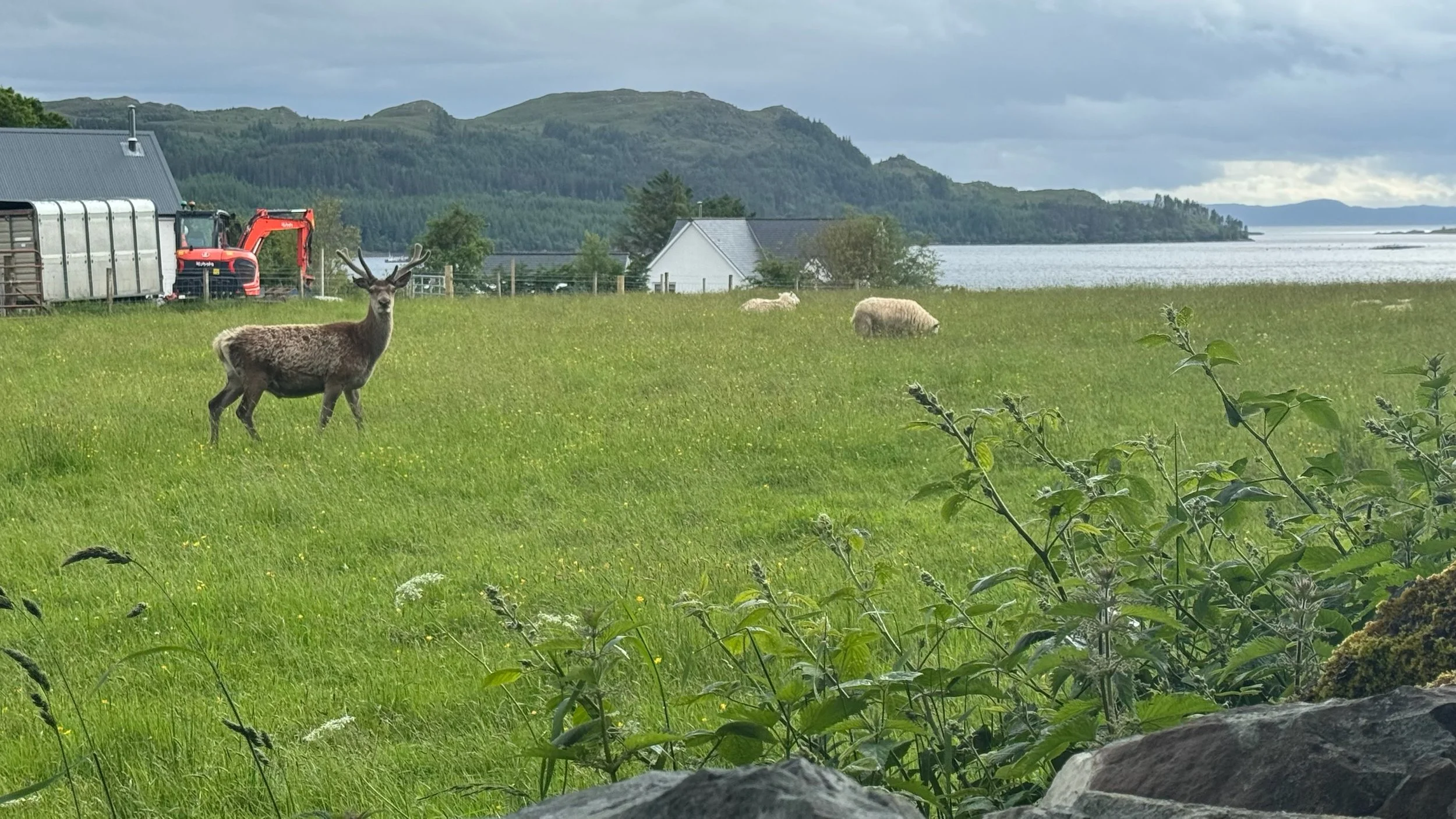
After lunch, we head to our next retreat, a grand Victorian hunting lodge on the shores of Loch Gairloch. We arrive early, giving everyone time to settle in and enjoy the view across the water. That evening, we bring our guests onto the lawn for drinks. We’ve arranged a private bagpiper to surprise them. He appears at the far end of the lawn and walks towards us playing, with the loch and evening light behind him. We stand together and listen as the sound carries across the water. It’s a lovely moment to share with our guests.
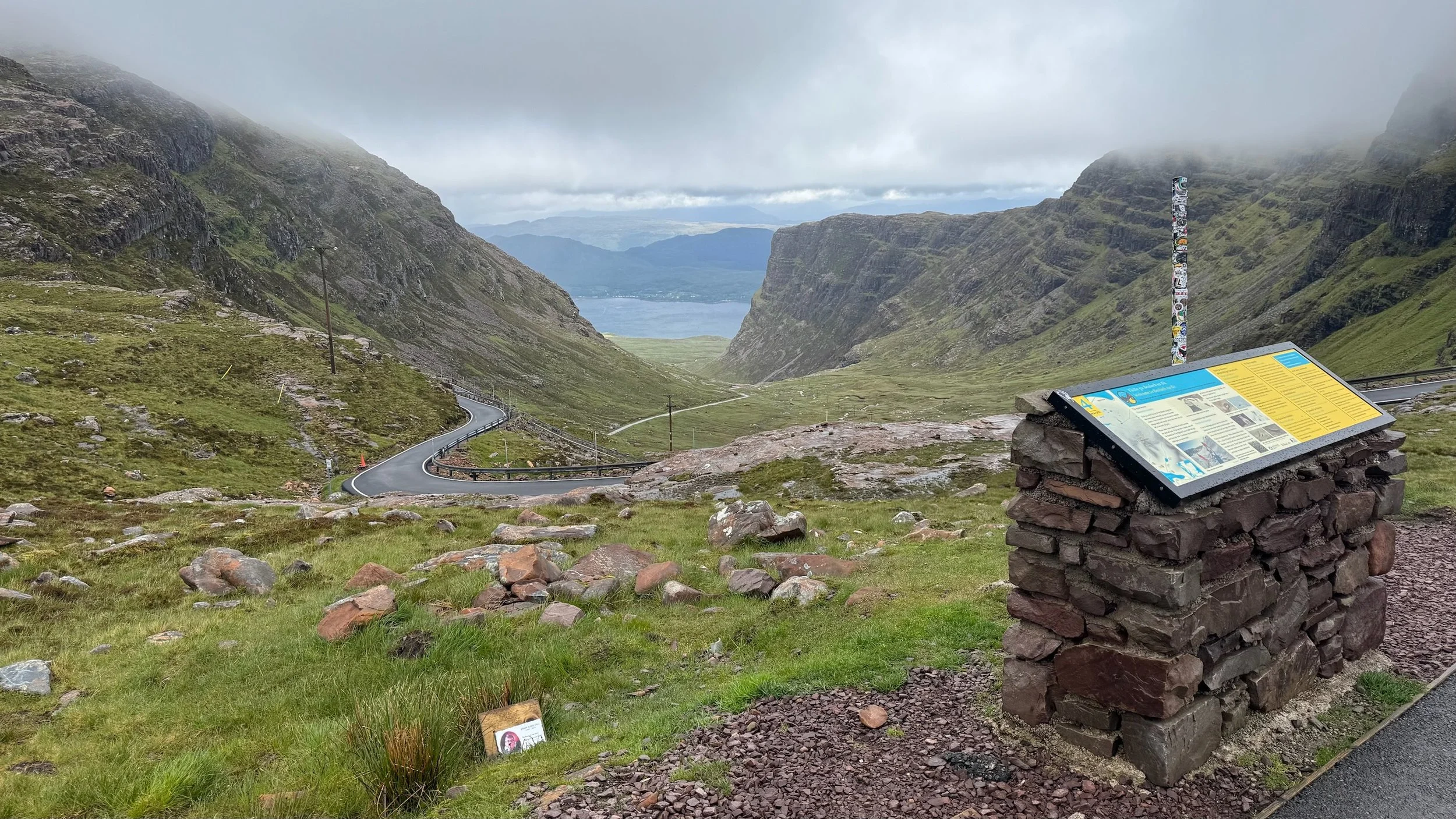
The next day, we follow the coast to Applecross for lunch before taking on the Bealach na Bà. The road climbs high into the mountains, with tight bends and steep slopes, then winds back down towards the coast. It’s a drive that asks you to concentrate, but the views make every turn worthwhile.
From there, we cross to Skye and stop at Sligachan. Beside the road is the old stone bridge over the River Sligachan, built by Thomas Telford between 1810 and 1818. With the Cuillin mountains rising behind it, it’s one of the island’s best-known views.
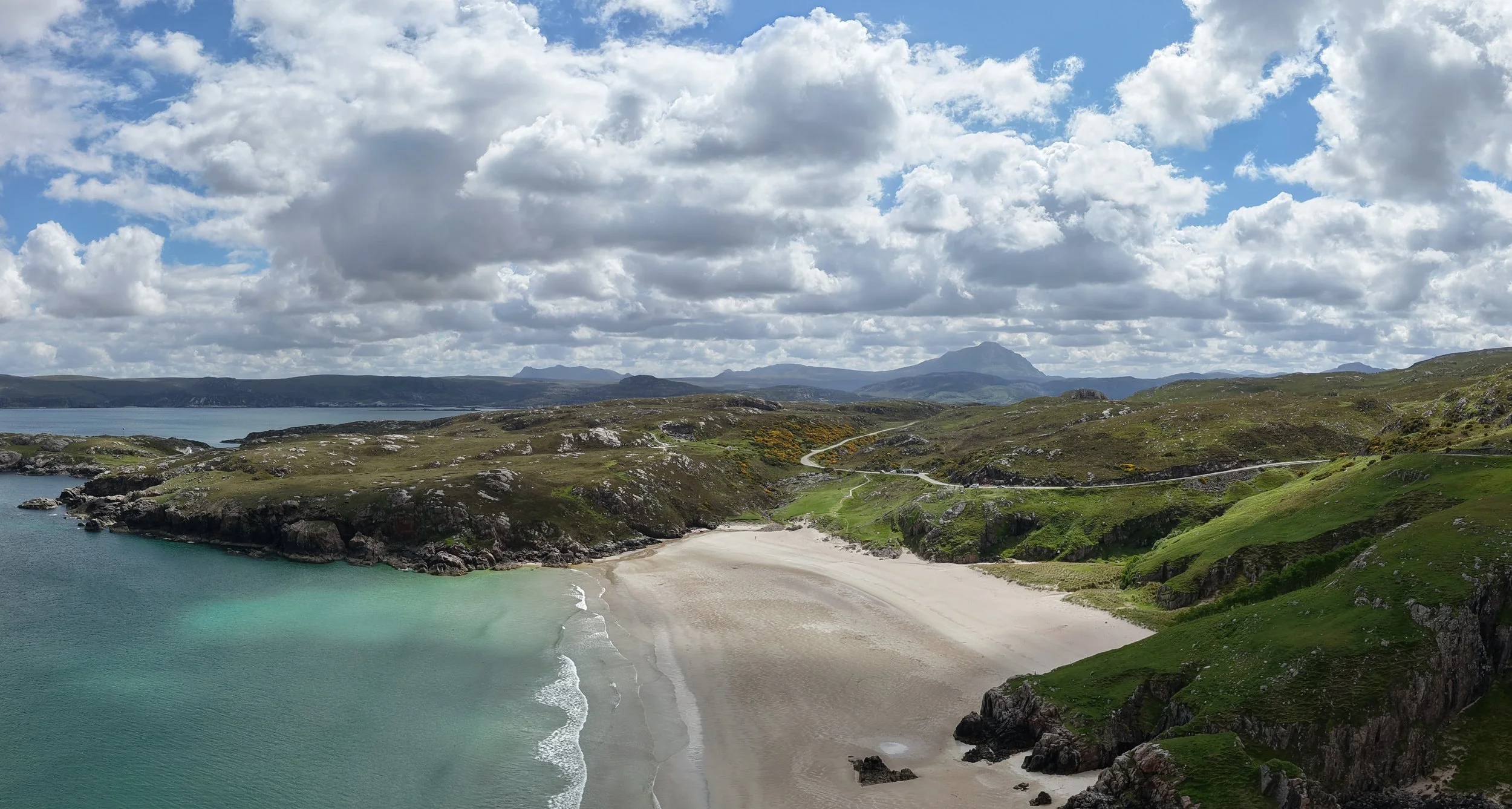
Ceannabeinne Beach
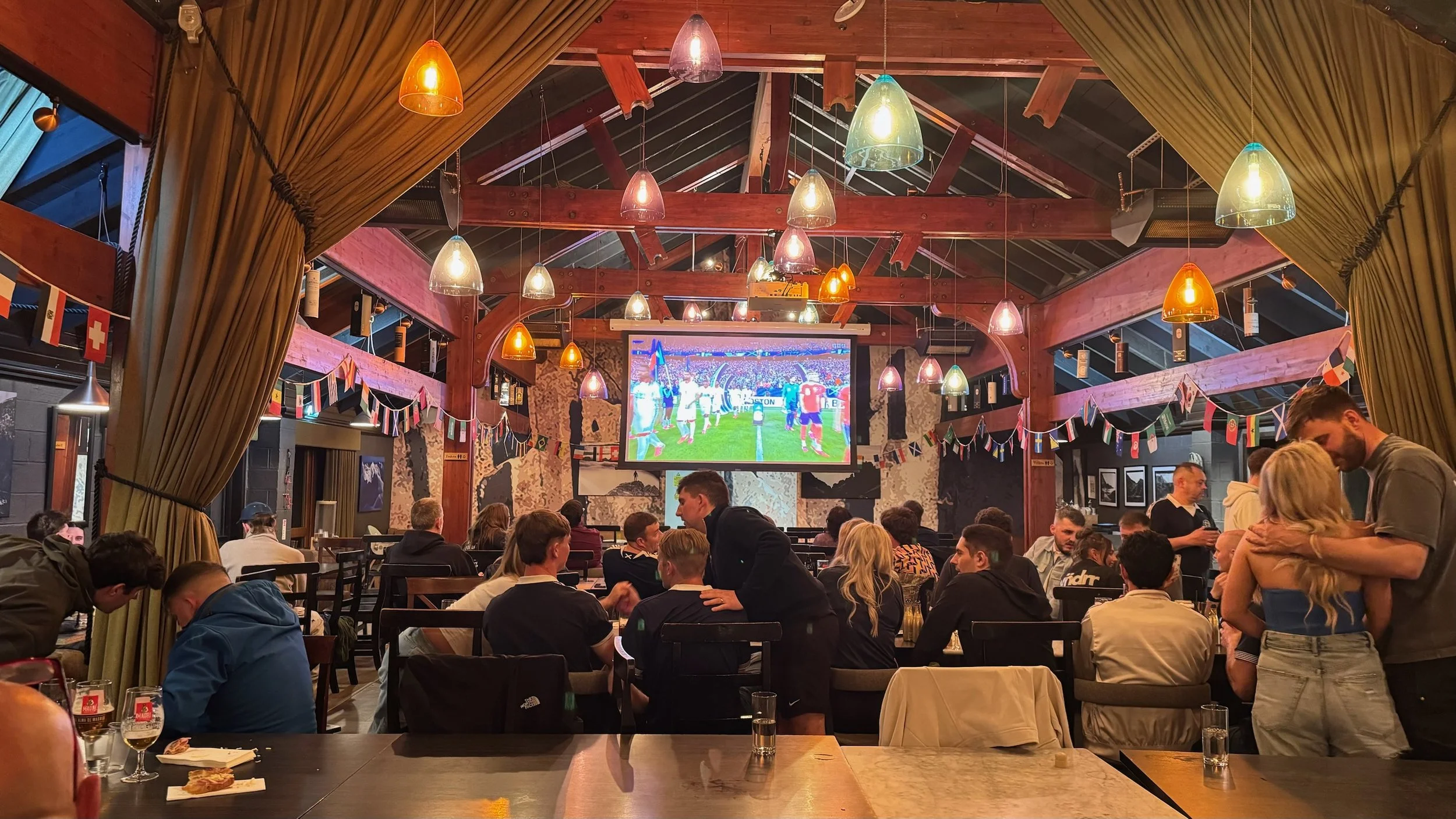
Saturday evening is our guests’ own. They can head to Portree, relax at our retreat or enjoy the Irish bar nearby. A few guests have another plan: they set their alarms and get up at 2am to watch Scotland play their first World Cup match since 1998. With the 2026 tournament being held across the USA, Canada and Mexico, it feels fitting to watch Scotland’s long-awaited return in North America, alongside guests who have travelled from the US.
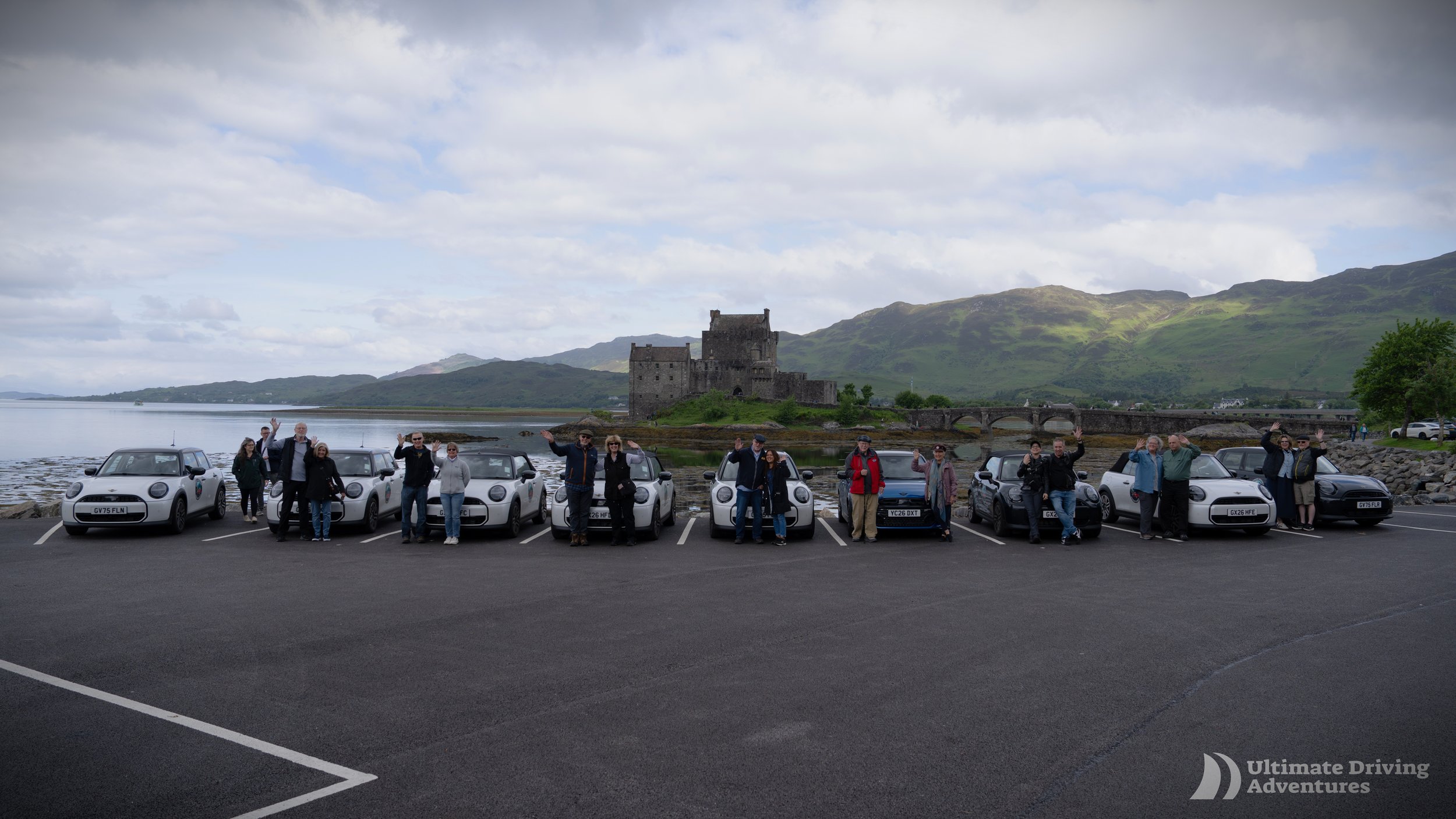
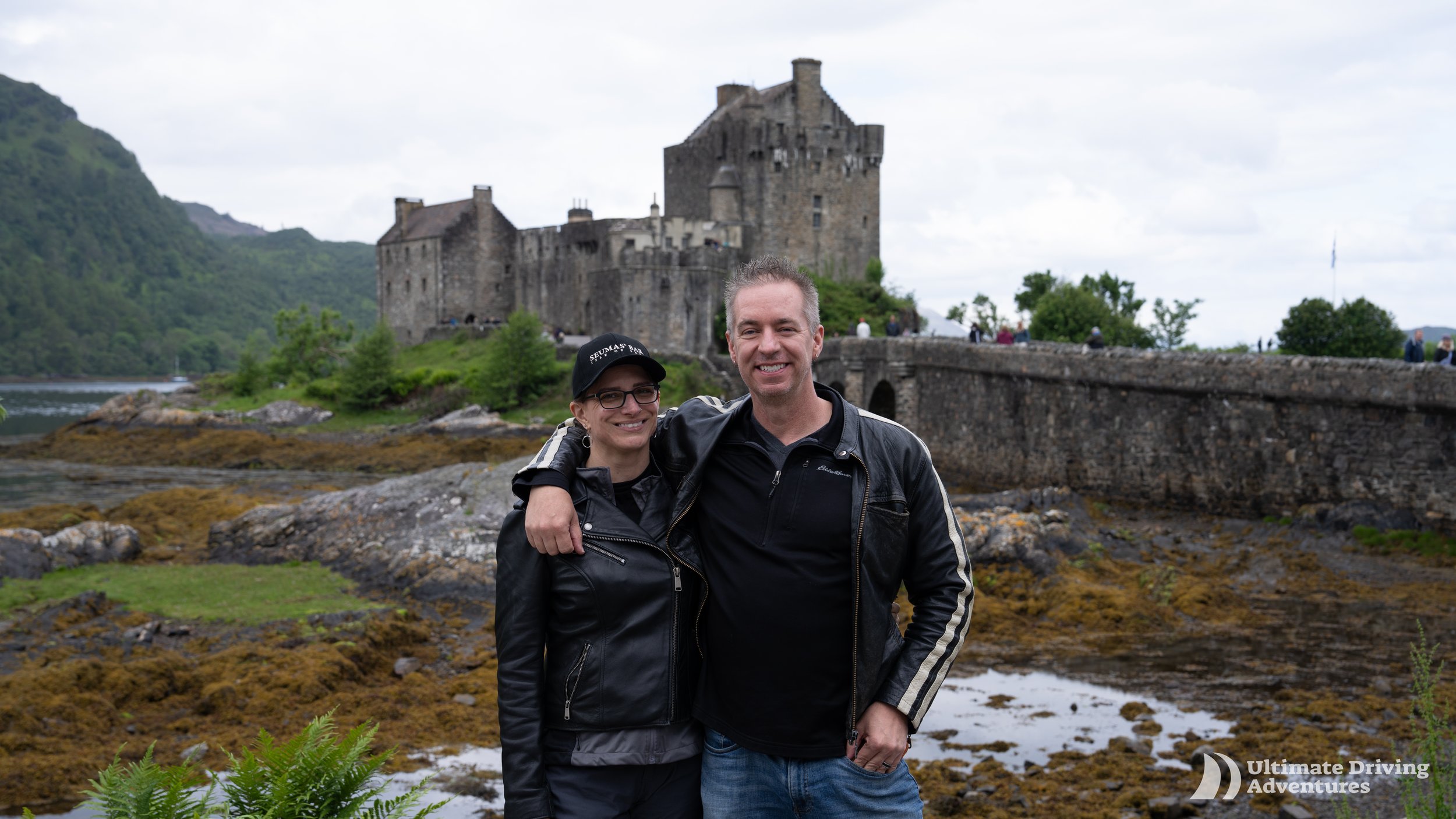
Leaving Skye behind, we cross back to the mainland and visit Eilean Donan Castle. It stands on a small island where three sea lochs meet, a position that made it an important stronghold from the 13th century. The castle was destroyed during the Jacobite rising of 1719 and left in ruins for nearly 200 years before being restored in the early 20th century. With the water and mountains all around it, it’s easy to see why this is one of Scotland’s most recognised castles.
At Fort Augustus, we stop to see the boats pass through the flight of five locks on the Caledonian Canal. Designed by engineer Thomas Telford, the canal opened in 1822 to create a safer route across the Highlands, linking the east and west coasts without ships having to navigate around the north of Scotland. Here, the locks raise or lower boats on their journey to or from Loch Ness.
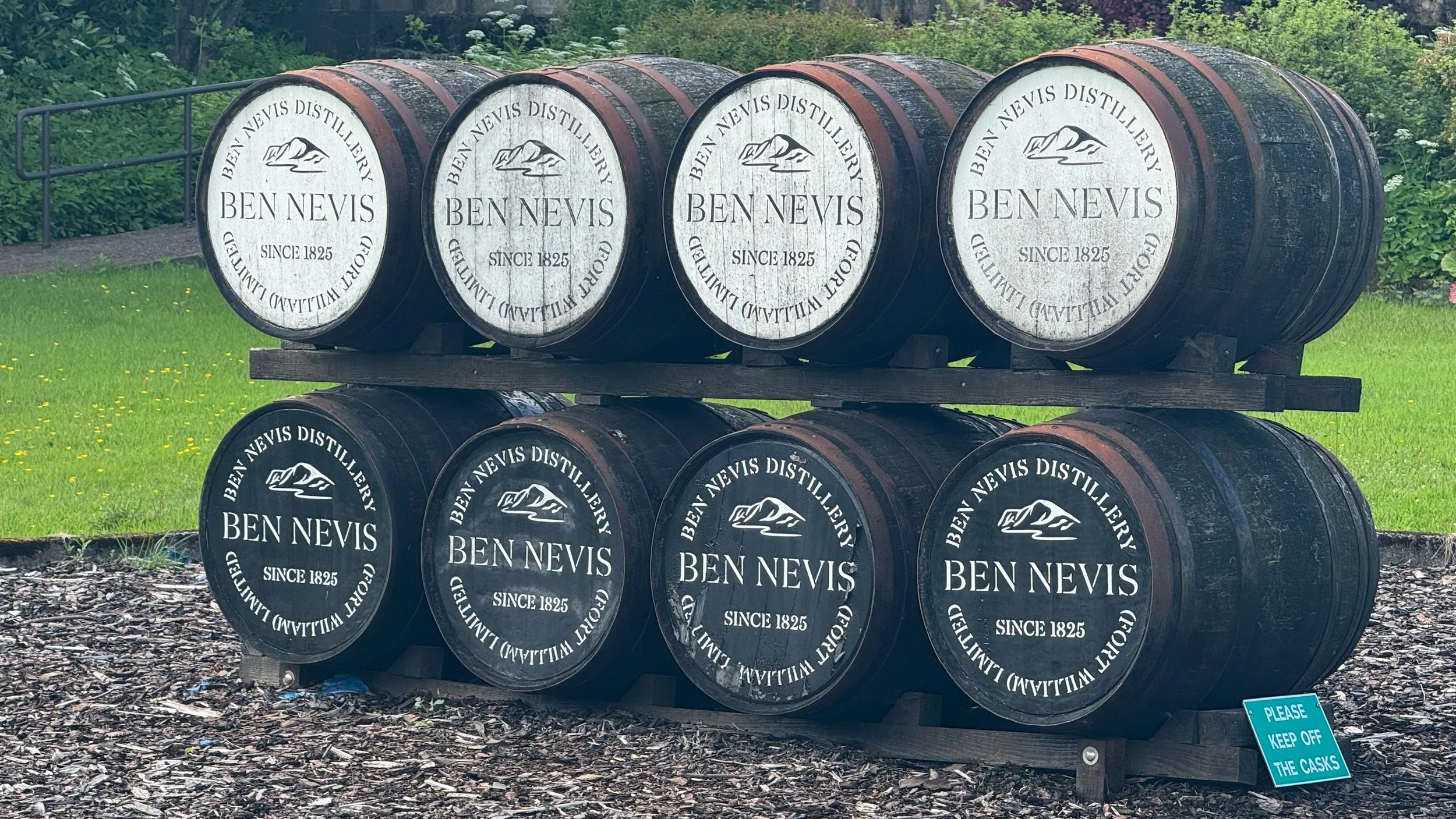
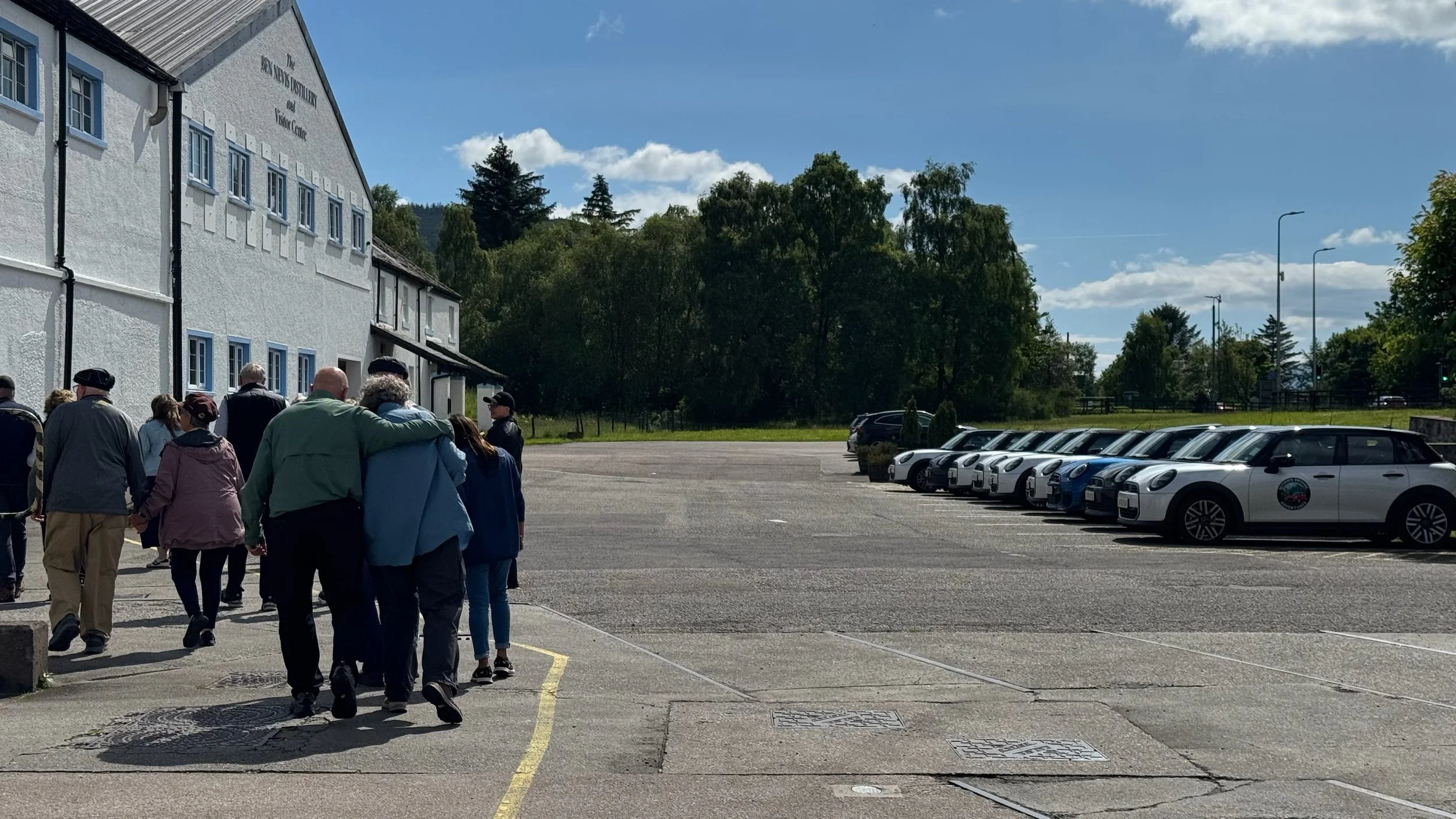
We continue to Ben Nevis Distillery, founded in 1825 by John MacDonald, known as “Long John”. After the tour and tasting, we’re back on the road, with the landscape changing again as we drive through Glencoe. The coast and sea lochs give way to a deep glen, with steep mountain slopes closing in beside the road. This landscape was shaped by volcanic activity and glaciers, and its history includes the 1692 Massacre of Glencoe. It’s a powerful place to drive through; the mountains make the road feel small, and the scale of the glen is very imposing as your drive through.
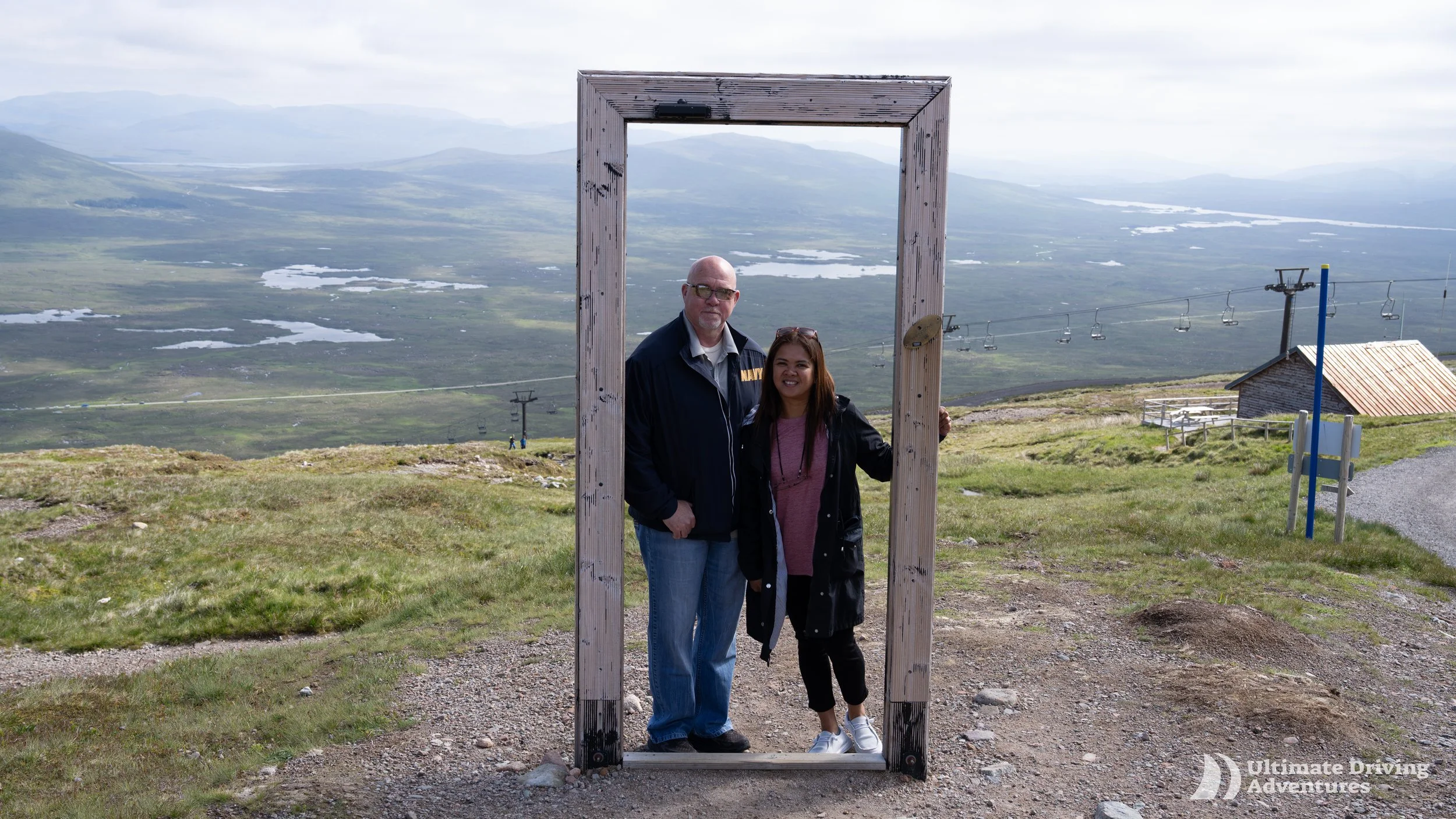
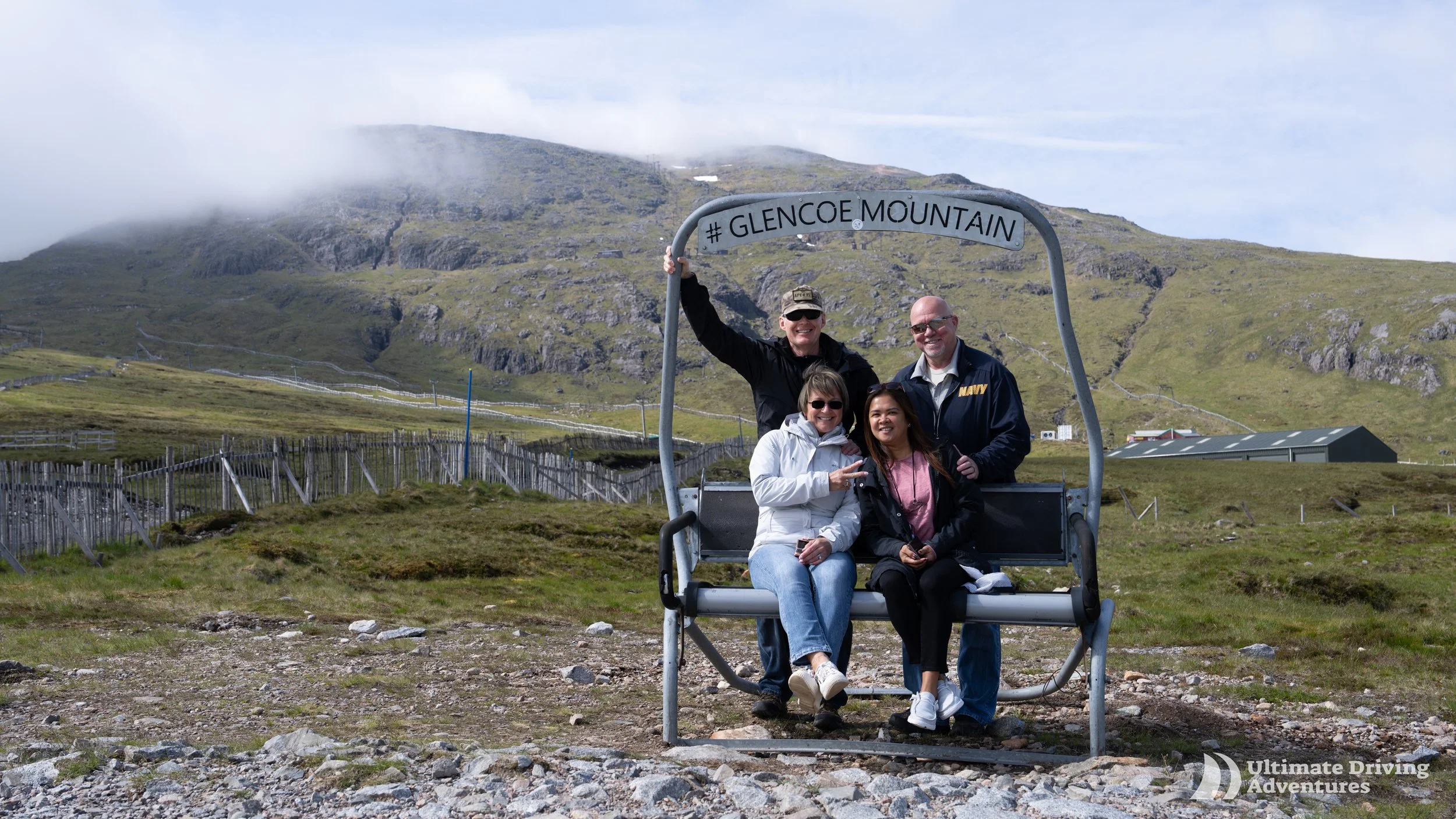
On our last full day in Scotland, we drive back through Glencoe and all take the chairlift up the mountain. As we rise, the valley opens beneath us, with Rannoch Moor stretching towards Buachaille Etive Mòr. We take in the view before coming back down and setting off south.
Lunch brings us to Inveraray, beside Loch Fyne. The town’s broad streets and Georgian buildings date from its 18th-century development by the Duke of Argyll. From there, the road climbs through Glen Croe to Rest and Be Thankful. The soldiers who built the original military road in 1753 gave the pass its name. We follow the road through the mountains before continuing south to Luss.
At Luss, we get out beside Loch Lomond and walk among the stone cottages near the water. Then it’s on to our final retreat in the Trossachs. After the day on the road, we unwind in the spa and take in how much the scenery has changed since Hampshire: from manicured countryside to Highland passes, sea lochs and the mountains of Glencoe. Tomorrow, we turn south towards the Lake District.
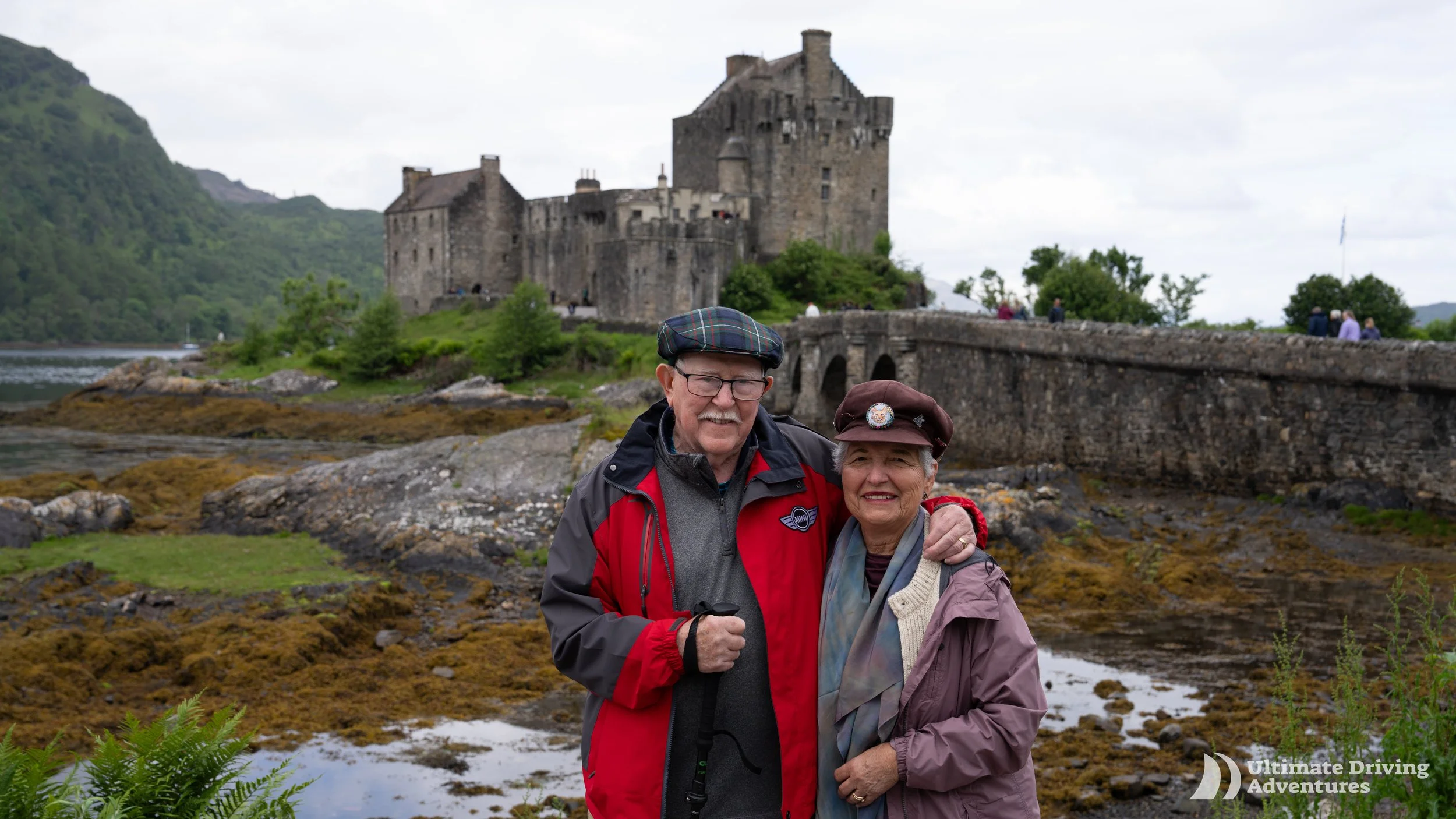
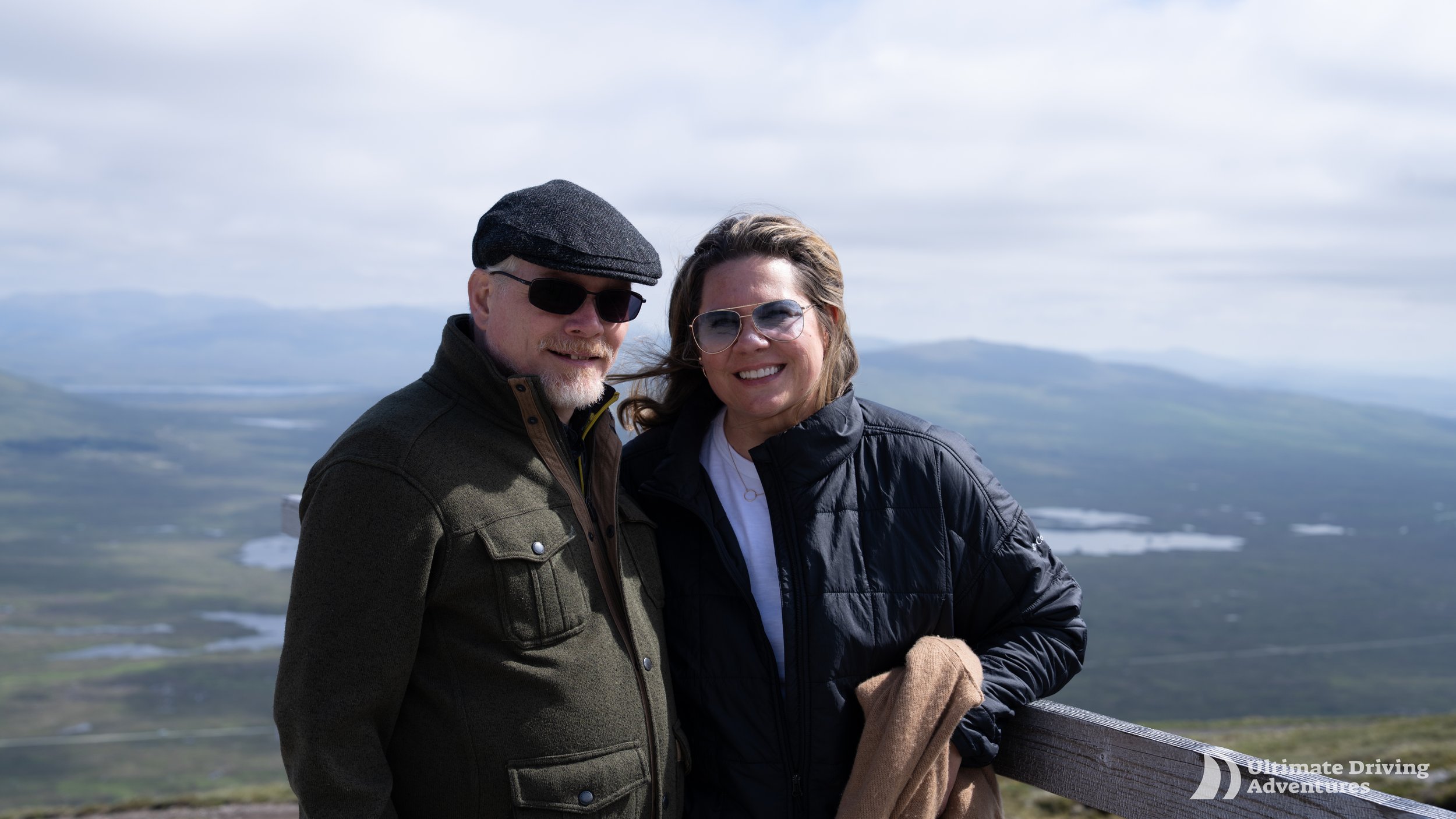
Eielan Donan Castle with Chuck and Linda
As Scotland comes to an end, we hold our fun end-of-tour prize giveaway. Our winner, Stephanie, gets to choose a photograph, which we will have made into a custom canvas and sent home. There’s plenty of laughter as we draw the prize, but it also marks the end of our time in Scotland, and there’s a touch of sadness as we point the MINIs south.
We still have one special stop before we reach the south of England: the Lake District. Haweswater feels a world away from the busy roads, tucked beside the reservoir with mountains rising around it. Our retreat is a striking Art Deco building, built in 1937 as part of the dam project. It replaced the old Dun Bull Inn, which was lost when the valley was flooded. Inside, the Art Deco details give the place a character all its own; outside, the water and hills make a wonderfully peaceful setting for our last night on the road. Although not in Scotland, this is one of our guests favourite stops.
The following day, we leave the Lake District behind and drive south to the Hampshire mansion where our adventure began. There’s something special about returning to the same place after two weeks on the road. We’ve covered so much ground, watched the landscape change from the gentle countryside of Hampshire to the mountains, lochs and coastlines of Scotland, and shared far more than a line of MINIs along the road.
That evening, we come together for one final meal before saying our farewells. By now, our guests have become great friends, with stories and memories that will stay with us long after the cars are returned. It’s hard to believe how much we’ve packed into two weeks. For many of our guests, this really is a trip of a lifetime, and it’s why we love sharing these adventures with them.
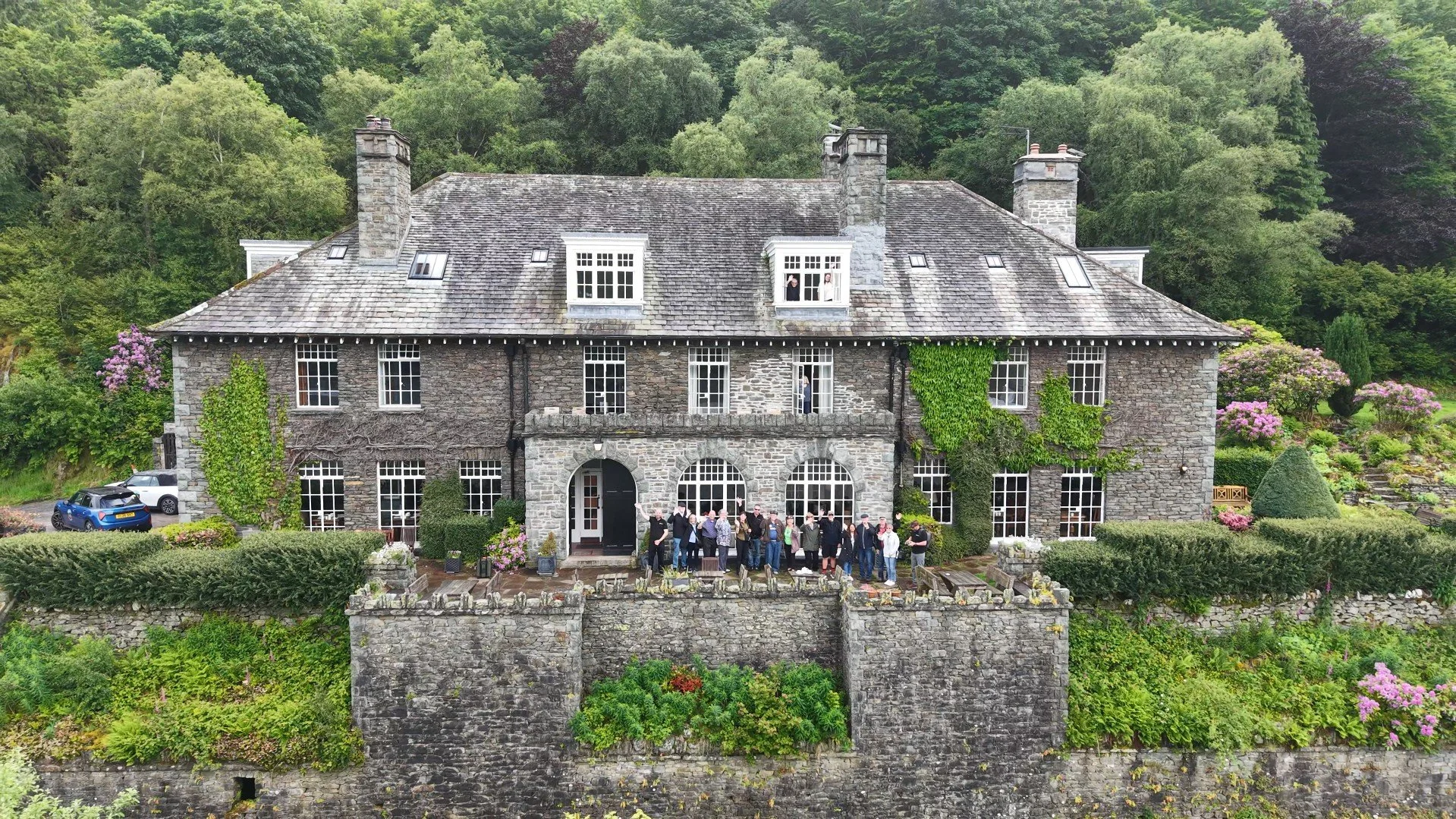
A final farewell from the Lake District to an extraordinary trip…
If you’ve been thinking about joining us, get in touch and let’s talk about the next tour. We’d love to welcome you along.
